
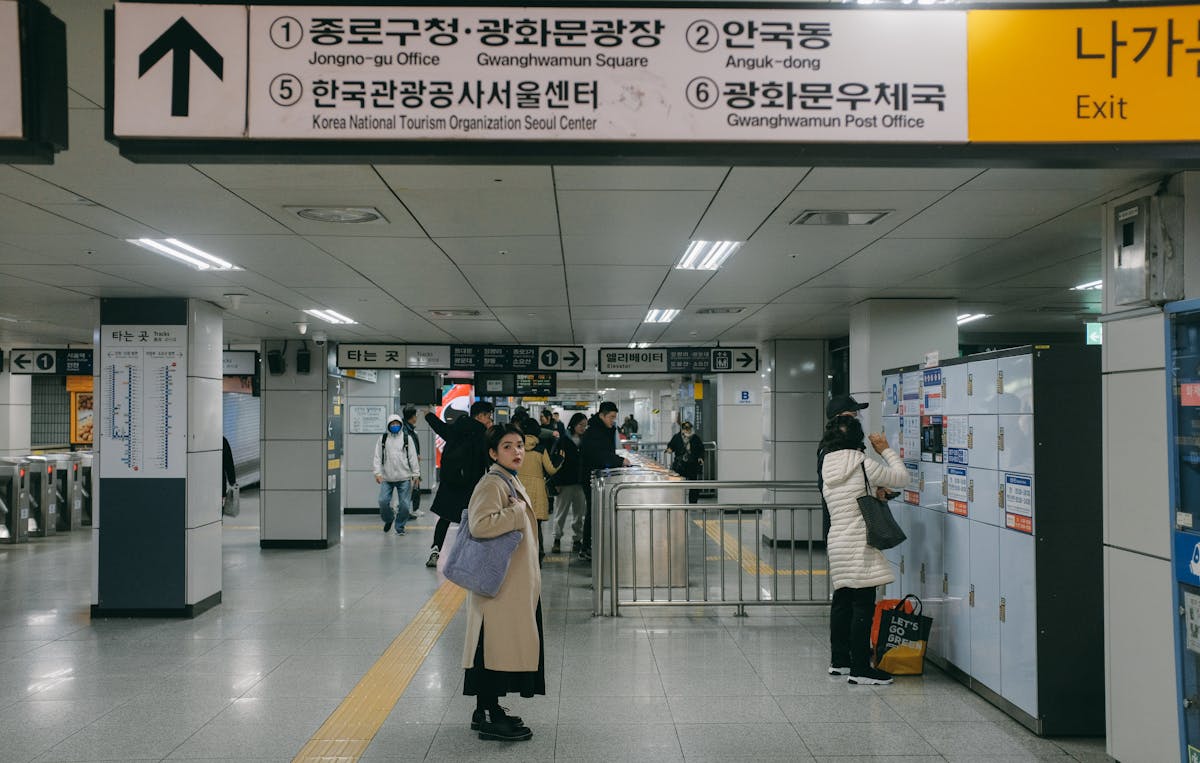

I’ve lived in Seoul for 10 years. I’ve taken Line 2 to work so many times I could draw the circle from memory. And there are stops I have genuinely never gotten off at.
Not because I forgot. Because there’s no reason to.
Most subway guides tell you which stations to visit. This one goes in the other direction. Here are the stations that show up in “Seoul subway tips” and travel guides — and why getting off there might not do what you’re hoping it will.
Stations That Sound Good But Will Disappoint
Nodeul Station (Line 9)
Nodeul Island is a real place — a small island in the Han River that got renovated into a cultural space with a concert hall and some cafes. It sounds good on paper. The problem is that it’s genuinely hard to get to from most places visitors are staying, and once you’re there, it’s… fine. Nice on a clear day. But “nice on a clear day” describes a lot of places in Seoul that are easier to reach.
If you want Han River views and a relaxed afternoon, you’re better off at Ttukseom or Banpo via much more accessible stations. The Han River parks have their own guide — that’s where the actual activity is.
World Cup Stadium Station (Line 6)
Unless there’s an actual match happening, this station leads to a large, mostly empty stadium complex. Some blogs recommend it for “interesting architecture” or the nearby Haneul Park. Haneul Park is a real ecological park with good views of the city and is worth visiting — but almost nobody mentions that it’s about 20 minutes on foot uphill from the station. That’s 20 minutes each way, on a hill, with no shade in summer. Take the shuttle bus that runs on weekends if you go. It’s a small detail that every guide omits.
Get off at Mapo-gu area stations instead if you want that northwest Seoul vibe without the hike.
Seoul Grand Park Station (Line 4)
The name sounds like something central. It isn’t. Seoul Grand Park is in Gwacheon, which is technically not Seoul — it’s about 35 minutes south on Line 4. It’s a fine zoo and amusement park combo, but it’s a full-day commitment, not a quick detour. Multiple guides list it as a “Seoul attraction” without mentioning it’s a suburb. If you’re checking it off a list without that context, you might end up surprised at the commute.
The Distance Problem: Station Name vs. Actual Location
This one trips people up more than anything else. The station name doesn’t always mean you’re close to what you came for.
Gyeongbokgung Station (Line 3) → Gyeongbokgung Palace: Actually fine. The palace’s main gate is about 5 minutes on foot from Exit 5. One of the rare cases where the name matches.
Dongdaemun Station (Line 1/4) → Dongdaemun Design Plaza (DDP): This confuses people. DDP is actually closest to Dongdaemun History & Culture Park Station, not Dongdaemun Station itself. They’re two different stations about 10 minutes apart on foot. If you get off at Dongdaemun Station expecting to walk right into DDP, you’ll be walking longer than expected. Exit 14 at Dongdaemun History & Culture Park is the correct stop.
Insadong area: There’s no “Insadong Station.” Anguk Station (Line 3) is the closest, Exit 6, then a 5-7 minute walk. Some visitors get off at Jonggak (also Line 1) because it sounds central, and then spend 15 minutes walking to Insadong wondering why the map isn’t matching reality. For more on navigating Insadong, the area guide covers the entry points.
Line Transfer Hell: Two Combinations to Avoid
Seoul subway transfers are usually fine. Then there are two combinations that are not fine.
Sindorim (Lines 1 + 2) During Rush Hour
Sindorim is where Line 1 and Line 2 intersect in the southwest, and it is one of the most crowded stations in the entire city during 8am-9am. The transfer corridor is long, the platforms get packed to the point where you might need to let 2-3 trains pass before boarding, and the crowds move slowly because there are a lot of people going in multiple directions. Locals who commute through Sindorim every day have adapted. First-timers find it overwhelming.
If you’re transferring between Line 1 and Line 2 and it’s before 10am on a weekday, consider whether you can go one more stop and transfer at a different point. Guro Digital Complex (Line 2) connects back via a slightly less chaotic path. It’s a small reroute but it’s worth it if you have luggage or are feeling claustrophobic.
Konkuk University Station (Lines 2 + 7) for the Line 7 Transfer
The Line 7 platform at Konkuk University is on a different level than the Line 2 platform and involves a transfer route that is genuinely confusing the first time. The signs are fine but the physical distance is longer than expected and there’s a stretch where the signage briefly disappears. I’ve watched people walk in three different directions here. If you’re transferring here for the first time with luggage, just follow a local — someone will be going the same direction.
If you can avoid this transfer, do it. City buses on the surface often connect the same neighborhoods more directly.
Stations I Have Genuinely Never Exited At
After 10 years: Maebong (Line 3), Gupabal (Line 3 terminal), and most of the Line 5 western extension past Kimpo Airport. That’s not because those areas are bad — I’m sure they’re fine neighborhoods. It’s that nothing in my life has ever required me to go there.
Which is the point. Seoul has 331 subway stations. The tourists and the guidebooks cover maybe 30 of them. The other 300 are just places where people live and work. If you’re visiting Seoul for a week, you could see everything worth seeing and probably only need exits at 15-20 stations maximum. Don’t feel pressure to “use” the system more than you need to.
The subway is a tool, not a destination.
Last updated: May 2026. Transfer conditions and station distances verified from personal use this year.

About Jay Han
Jay has lived in Seoul for over 10 years and works as a marketing professional. He started Korea Hub to share the kind of honest, specific information he wishes he’d had when navigating Korean culture, food, and travel for the first time. Not a travel blogger — just someone who actually lives here.
The subway stations at the edge of the line network have always interested me — the ones where the train empties out and you’re one of five people left in the car. I’ve been to most of them.
More about Jay →