
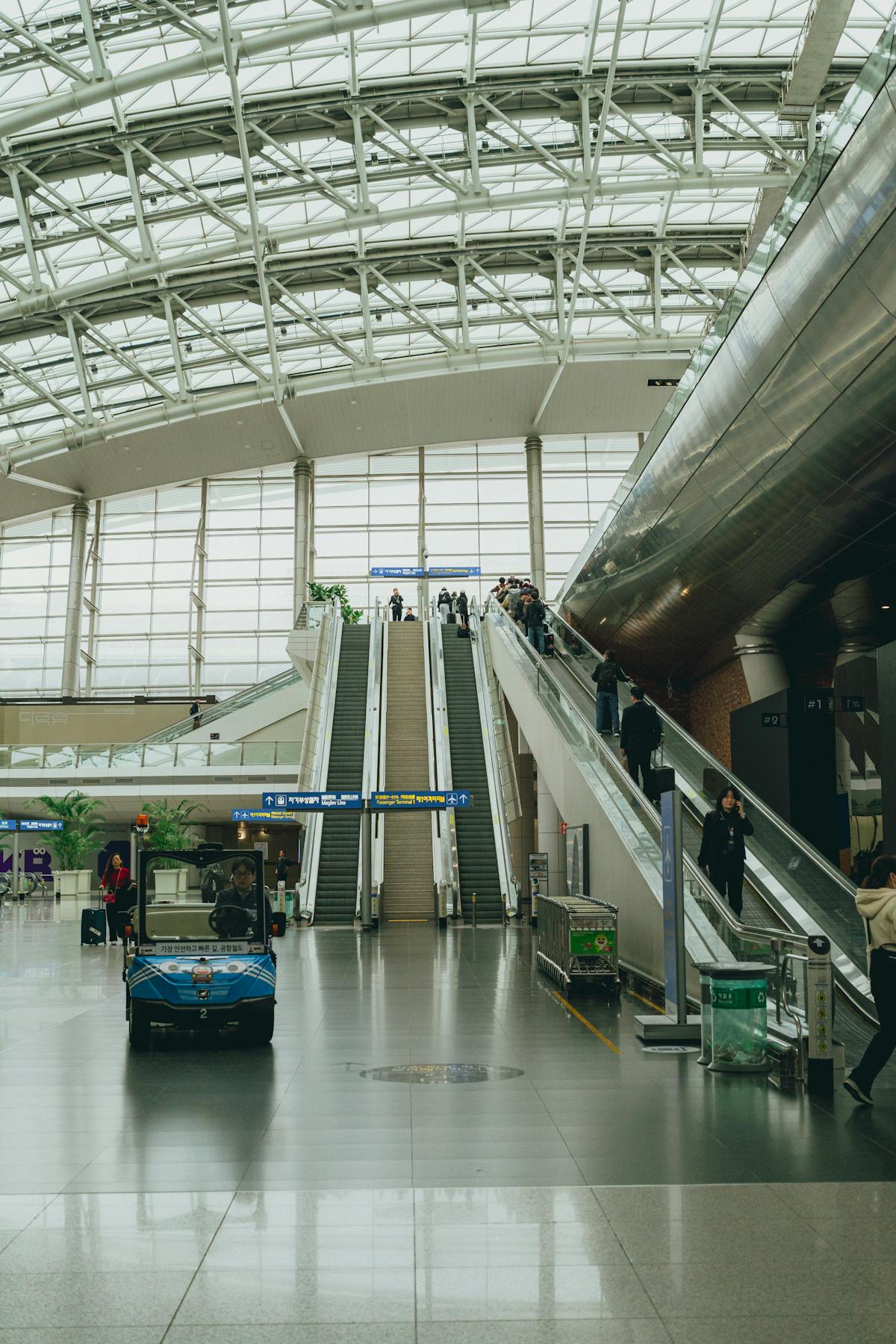

Korea is a small country with a very fast train. The KTX — Korea Train eXpress — runs between Seoul and Busan in about two hours and forty minutes. That’s roughly 400 kilometers. By highway it would take five or six hours, depending on traffic, and the highway traffic going to Busan on a holiday weekend is genuinely terrible.
I’ve taken the KTX to Busan probably eight times in the past four years. A couple of trips to Gwangju, once to Gangneung for the mountains. It’s become my default for any Korean city trip that’s more than two hours driving distance.
Main Routes
The KTX network connects most major Korean cities from Seoul. Primary routes:
Seoul → Busan: The flagship route. Around 2h 40m on the fastest trains, slightly longer on some departures. Both Gyeongbu Line (Seoul Station → Busan Station) and Honam-Gyeonjeon routes exist — check which station you’re departing from and arriving at.
Seoul → Gwangju (Songjeong): Around 1h 30m on the Honam Line. The Honam Line goes south toward Jeolla province and is busier during Chuseok and Seollal holidays when families travel to ancestral hometowns.
Seoul → Daejeon: Around 50 minutes. Genuinely fast. Some people commute Seoul-Daejeon on this, which seems extreme to me but it exists.
Seoul → Daegu: About 1h 40m.
Seoul → Gangneung: The Gyeonggang Line opened before the 2018 Pyeongchang Olympics. About 1h 30m to Gangneung — faster than driving by a significant margin, especially in ski season when the Yeongdong Expressway gets backed up.
Where to Book
Korail Website and App
The official Korail website (letskorail.com) is the primary booking platform. The English version is functional, if slightly clunky. You can book up to 1 month in advance.
The Korail Talk app (코레일 앱) is available in Korean and English. Downloading it before your trip is useful for looking up real-time train information, platform numbers, and managing your booking.
Korea Pass (for Tourists)
If you’re taking multiple trains over several days, the Korea Rail Pass is worth considering. It’s available for 2, 3, 5, or 7 consecutive days of unlimited KTX travel, purchased through the Eurail/Rail Pass system online before you arrive. Prices vary — a 3-day pass is around $100–130 USD depending on season.
Whether it’s worth it depends on your itinerary. For one round-trip Seoul-Busan, buying individual tickets is cheaper. For a 10-day trip hitting four or five cities, the pass makes sense.
Ticketing at the Station
Self-service kiosks at Seoul Station and most major stations have English language options. You can buy tickets with credit card or T-money. The kiosk interface is reasonably clear.
Staffed windows also exist and can handle purchases in English — station staff vary in English ability but there’s usually someone who can help.
Seoul Station vs. Suseo (SRT)
There are actually two high-speed rail services in Korea: KTX (Korea Train eXpress, operated by Korail) and SRT (Super Rapid Train, operated by SR). They run similar speeds on overlapping routes.
KTX departs from Seoul Station (서울역) and Yongsan Station (용산역). SRT departs from Suseo Station (수서역) in southeastern Seoul.
SRT is sometimes cheaper than KTX for the same route by 10–15%. The tradeoff is that Suseo Station is less centrally located — getting there requires the Bundang Line subway from Gangnam area, which adds travel time. If you’re staying in Gangnam or south Seoul, SRT is actually convenient. If you’re in central or northern Seoul, Seoul Station KTX is almost certainly easier.
When I first tried to book a ticket for a Busan trip a few years back, my biggest mistake was not realizing there were two separate systems with two separate booking websites. I ended up at Seoul Station looking for an SRT train. Don’t make this error — check which service you booked and which station it departs from.
Seat Types
Standard (일반실): Fine. Comfortable seats, 2-2 configuration on most trains (two seats on each side of the aisle), adequate legroom. For a 2h 40m trip to Busan, this is perfectly good.
First Class (특실): Wider seats, 2-1 configuration (two seats on one side, one on the other), more recline. About 40–50% more expensive than standard. I’ve used it once on a longer trip when I had work to do and wanted more space. Honestly the standard class is fine for under 3 hours.
Window vs. Aisle: Standard preference logic — window if you want to see the scenery, aisle if you want easy exit. The Korean countryside is genuinely pretty on the Gyeongbu line, especially around Chungcheong province. Worth a window seat if it’s your first time.
At the Station
Seoul Station is large. It has two main terminal areas side by side — the old historic building (now a cultural space) and the current active station. The active terminal is the glass building. Subway lines 1 and 4 plus the AREX airport rail all connect here.
Arrive at least 20 minutes before departure. Not because you need to — boarding is usually quick — but because you need to find your platform (플랫폼/승강장), which can be a long walk in larger stations. The departure board shows platform numbers. Trains are prompt.
There are luggage storage lockers at Seoul Station and Busan Station — around 3,000–6,000 won per day depending on size. Useful if you’re doing a day trip and don’t want to carry bags.
The food options at Seoul Station have improved significantly. There’s a food court basement level and various cafes and convenience stores in the station mall section. Prices are station-standard — slightly higher than street. I usually bring my own food for train rides because I’m cheap and also because the seat tray is a perfectly functional table.
On the Train
The train moves fast and quietly. The window view changes from dense Seoul urbanization to suburbs to countryside — rice fields, mountains, the occasional tunnel through a hill. The Gyeongbu route goes through some genuinely nice landscape in the middle section.
There’s a food cart service that comes through the aisle about 30 minutes into the journey, selling snacks, drinks, and dosirak (packed meal boxes). The dosirak are around 6,000–9,000 won. Honestly adequate. The coffee is the bottled type — not great but not terrible.
Mobile signal is solid throughout most of the route. WiFi on KTX trains exists but is inconsistent — don’t rely on it for anything important. The trains were fitted with WiFi routers years ago and some work better than others.
The quiet car (정숙칸) — if your train has one, it’s marked and announcements explain the rules: no phone calls, minimal noise. I use the quiet car when I need to actually work or sleep on a longer journey.
Arriving in Busan
Busan Station is in central Busan, connected to subway line 1 (orange line) and KTX/SRT services. From the station, you can reach Haeundae Beach in about 40 minutes by subway (transfer at Seomyeon to line 2), or Gamcheon Culture Village in about 30 minutes by subway (line 1 to Toseong, then short walk/bus).
Gwangju Songjeong Station is outside the main city — you’ll need a taxi or bus to reach Gwangju downtown. It’s about 20 minutes from the station to the city center by bus. Not super convenient, which is a general limitation of the Gwangju high-speed rail infrastructure compared to Busan.
Practical Numbers
Seoul to Busan, standard class: around 59,800 won one way. Round trip if both booked at standard: around 120,000 won. Off-peak discounts (early morning or late evening trains) can bring this down by 10–15%.
Seoul to Daejeon: around 23,700 won standard one way.
Seoul to Gwangju (Songjeong): around 46,800 won standard one way.
Prices change slightly depending on departure time and how far in advance you book. The Korail website shows exact current pricing for any specific route and date.
Last verified: May 2026. Information confirmed through direct experience and current sources. Something changed? Leave a comment and I’ll update it.

About Jay Han
Jay has lived in Seoul for over 10 years and works as a marketing professional. He started Korea Hub to share the kind of honest, specific information he wishes he’d had when navigating Korean culture, food, and travel for the first time. Not a travel blogger — just someone who actually lives here.
I’ve taken the KTX to Busan and back more times than I’ve counted — day trips, weekend visits, work trips. The two-hour ride still surprises me every time I look at how far the train has gone.
More about Jay →