

Insadong has been the go-to recommendation for visitors wanting to see “traditional Korea” for long enough that the recommendation itself has become somewhat complicated. The main street — Insadong-gil — is genuinely old Seoul in terms of what it sells and why it exists: antiques, traditional crafts, ceramics, calligraphy supplies, tea houses with rooms arranged for proper tea ceremony, Korean paper (hanji) in formats you didn’t know paper came in. All real. All there. But it’s also extremely busy with tour groups, which changes the experience considerably depending on when you arrive.
When I first visited on a Saturday afternoon, I almost wrote it off. The crowd density on the main street made browsing feel like a competitive sport, and the commercial pressure from shop owners was higher than elsewhere in the city. I came back on a Tuesday morning. Different neighborhood entirely. I ended up spending three hours in a ceramics shop, talking to the owner through a combination of his limited English and my essentially nonexistent Korean, and left with a small bowl that I still use and think about when I do.
What You’re Actually Looking At
Insadong occupies a zone north of Cheonggyecheon Stream and south of Gyeongbokgung Palace, roughly between Anguk and Jongno stations. The main street runs about 700 meters and is closed to cars on weekends (10am to 10pm), which makes it more pleasant to walk but also concentrates the foot traffic considerably.
The shops selling genuine traditional crafts and antiques are mixed in with newer establishments selling reproduction folk art and the kind of Korean-themed souvenirs you could find at the airport. This isn’t a secret or a problem unique to Insadong — it happens everywhere that tourism concentrates — but it does mean you need to pay attention. The shops that have been there for twenty or thirty years usually show it: more curated, less plastic, owners who are willing to have a slow conversation about an object rather than a fast transaction.
The galleries here are worth noting separately from the craft shops. Insadong has several gallery spaces that show contemporary Korean art alongside traditional work. The gallery district sits just off the main street, and entry to most spaces is free. This is one of the better free cultural activities available in central Seoul.
Ssamziegil: The Courtyard Complex
About halfway along the main street, a gate opens into Ssamziegil, an open-air shopping and gallery complex built around a central courtyard. It was designed to look like a traditional market structure but it’s not old — it opened in 2004 — and it functions now as a mix of independent shops, craft vendors, cafés, and occasional small performances.
I was surprised to find how much I liked it on a quieter day. The spiral walkway that winds up through the floors of shops creates an unusual browsing experience, and some of the vendors selling handmade jewelry, leather goods, and illustrated products are doing genuinely original work rather than reproducing traditional patterns. Prices in Ssamziegil run slightly higher than the street shops but the quality tends to justify it. A handmade ceramic piece might be 25,000 to 50,000 won; illustrated prints start around 8,000 won.
Tea Houses and Traditional Food
Insadong has the best concentration of traditional Korean tea houses in Seoul, and this is worth making time for specifically. These aren’t just cafés that happen to serve tea — the better ones are set up for the actual experience of traditional tea service, with low tables, cushions on the floor or on ondol heating, and a selection of teas that requires more than a glance at a menu to navigate properly.
O’sulloc has a flagship space here (they’re a well-known Jeju tea brand, reliable quality, slightly expensive at around 12,000 to 18,000 won for a tea service). The independent tea houses on the side streets charge similar prices but usually offer a quieter, less polished experience that I personally prefer. Look for handwritten signs and stairs leading up to second floors — those tend to be the older establishments.
My biggest mistake in Insadong food was ignoring the snack vendors on the street for too long. The shops selling traditional sweets and rice cakes (tteok) are the real deal — not tourist food, actually what people bring home to eat and give as gifts. Japsalgwa, yugwa, hangwa in the autumn: these are proper traditional confections that happen to be sold here, and they run 5,000 to 15,000 won for a small box depending on what you’re getting. The honey and sesame varieties in particular are worth trying even if you don’t have a sweet tooth.
Bossam (boiled pork wraps) restaurants cluster just off the main street and are a solid lunch option — two people can eat well for around 25,000 to 35,000 won total. The side dishes are generous and refillable, which is the standard everywhere in Korea and somehow never stops feeling like a small miracle.
Antiques and What to Look For
This is where Insadong gets complicated in the best way. There are antique shops here selling genuinely old things — furniture, ceramics, religious objects, paper items — alongside shops selling very good reproductions and shops selling things that present themselves ambiguously. I’m not an expert, and I’d encourage anyone seriously considering an antique purchase to either know what they’re looking for or spend time talking to the seller and observing how they discuss the object’s history.
The ceramic antique shops are the most approachable for a non-specialist. Korean celadon (cheongja) and white porcelain (baekja) have a long and significant history, and even the modern pieces made in traditional styles have their own value. Shop owners who know their inventory well can explain the difference, and if you’re spending more than about 50,000 won on anything claiming to be antique, asking questions is entirely appropriate and expected.
Hanji — traditional Korean paper — is one of the genuinely useful things to buy here. It’s available in raw sheets for calligraphy or art, but also in book form, notebook form, and as material for small crafts. Good hanji is sturdy, smooth, and has a particular quality of light when you hold it up. A sheet of high-quality hanji runs 3,000 to 8,000 won; notebooks are 8,000 to 20,000 won.
Bukchon Hanok Village: The Natural Extension
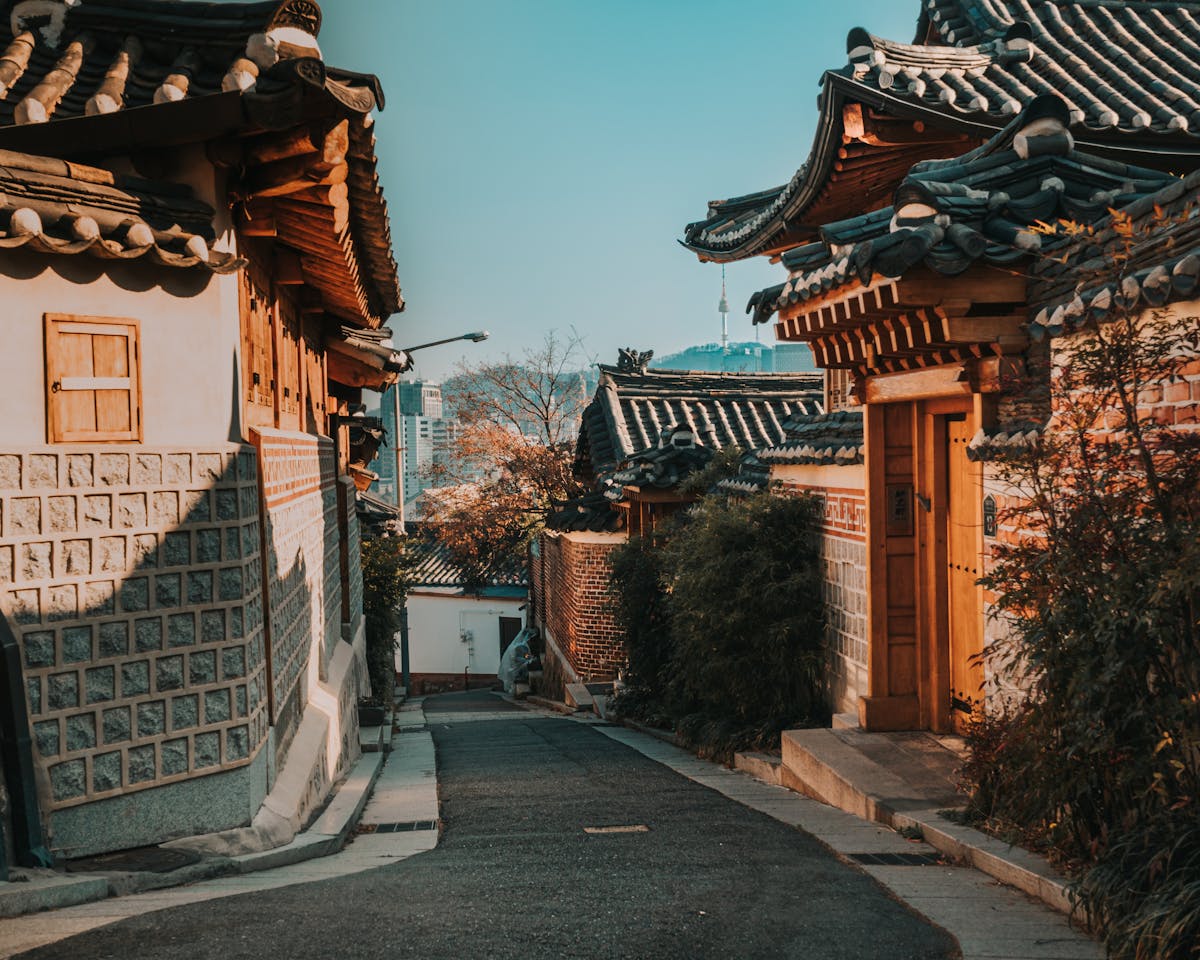
Insadong connects naturally with a walk toward Bukchon Hanok Village — you exit north toward Anguk Station and suddenly the streets narrow and slope upward and you’re in a residential area where the houses are traditional hanok structures. This isn’t a museum; people actually live here, which means there are rules about noise and photography in certain areas, and which also means you get a sense of what traditional Korean domestic architecture actually feels like in use.
The walk from Insadong main street to the Bukchon overlook point is about fifteen minutes on foot. The climb is steep in sections but the view from the top — looking down over the rooftiles with Namsan Tower visible in the distance — is one of the better visual moments available in Seoul without spending money or waiting in line.
Gyeongbokgung Palace: Also Right There
The north end of the Insadong zone runs directly into the area around Gyeongbokgung Palace, the main Joseon-era royal palace. Entry is 3,000 won for adults (free on first Sundays of the month). The changing of the guard ceremony happens at 10am and 2pm daily except Tuesdays. The palace grounds are large enough to spend 90 minutes to two hours exploring even without guided context, though an audio guide (available for 3,000 won) adds considerably to what you’re looking at.
The National Folk Museum of Korea is on the palace grounds and free to enter. It’s one of the better introductions to Korean history and material culture available in Seoul, and it takes maybe 90 minutes at a non-rushed pace. Worth combining with the palace visit if you have the time.
Getting There
Anguk Station (Line 3) is the closest station, about 5 minutes’ walk from the north end of Insadong. Jongno 3-ga Station (Lines 1, 3, 5) serves the southern end. From Myeongdong the walk is about 20 minutes through a pleasant stretch of the older city center. From Hongdae it’s about 25 minutes on the subway via Line 2 and then Line 3.
The main street is pedestrian-only on weekends, which makes arriving by subway and walking sensible. There’s no real parking situation to speak of, and taxis, while available, will drop you at the edge of the pedestrian zone on weekends.
Last verified: May 2026. Information confirmed through direct experience and current sources. Something changed? Leave a comment and I’ll update it.

About Jay Han
Jay has lived in Seoul for over 10 years and works as a marketing professional. He started Korea Hub to share the kind of honest, specific information he wishes he’d had when navigating Korean culture, food, and travel for the first time. Not a travel blogger — just someone who actually lives here.
Insadong is where I took my parents when they visited Seoul. The tea house we found by accident on a side street became the thing they talked about most after they went home.
More about Jay →