
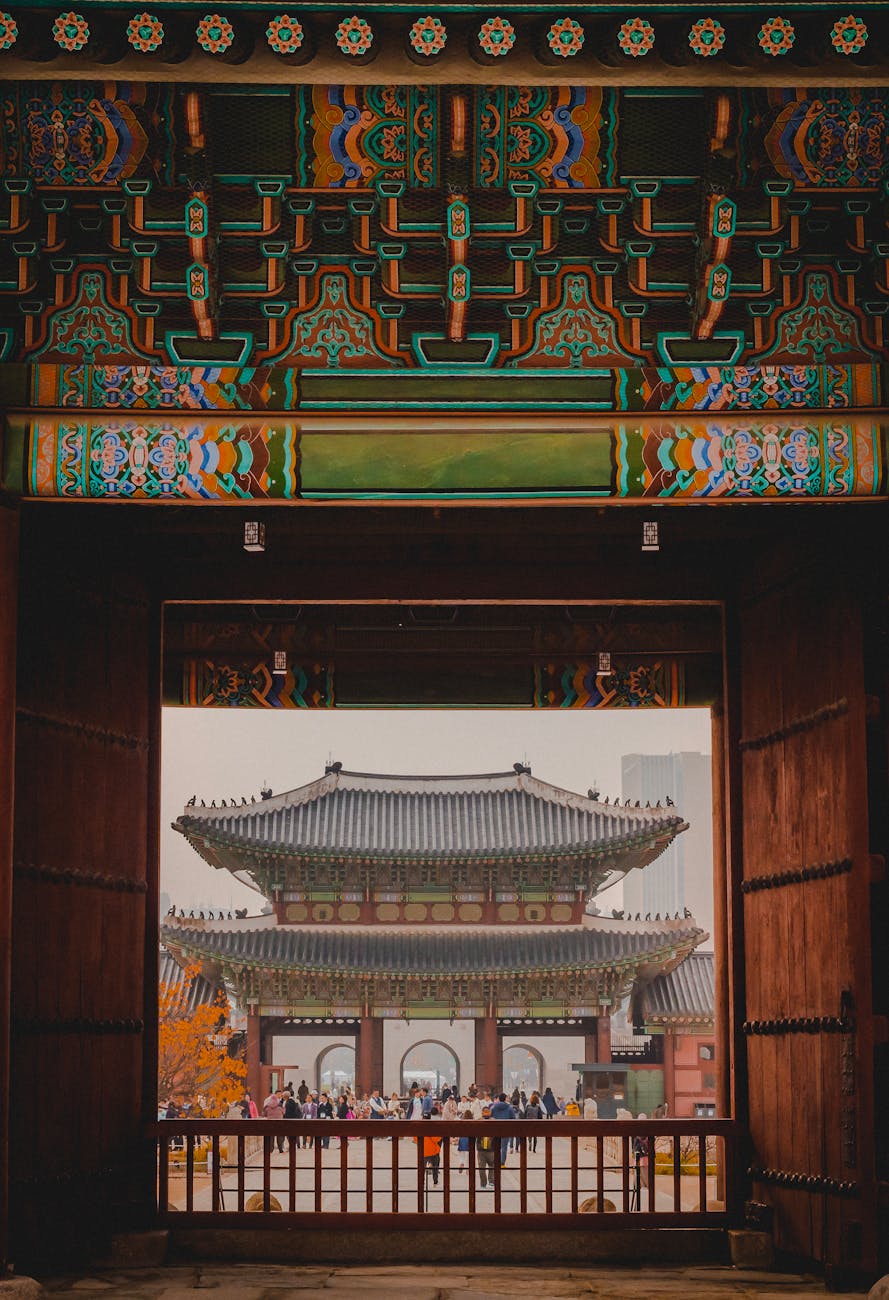
Seoul’s 5 Royal Palaces: Complete Guide to Korea’s Historical Sites
I’ve walked past Gyeongbokgung probably two hundred times without going in. This is embarrassing to admit, but it’s the truth about living in Seoul—you pass the big things constantly and somehow never prioritize them. Then one Sunday I finally went, grabbed an americano on the way, and spent three hours inside feeling like an idiot for waiting so long.
Seoul has five royal palaces from the Joseon Dynasty (1392–1910). They’re not all equally interesting, honestly—some are grand and worth half a day, one or two are more like quiet parks with historical context. Here’s what I’ve actually learned from visiting all of them.
🏯 The Five Palaces: Overview
During the Joseon period, Seoul (then called Hanyang) was the dynasty’s capital, and the five palaces served different functions for the royal family:
- Gyeongbokgung (경복궁) — The main palace. The biggest, most famous.
- Changdeokgung (창덕궁) — UNESCO World Heritage Site. My personal favorite.
- Deoksugung (덕수궁) — Surrounded by modern Seoul. Has a good museum.
- Changgyeonggung (창경궁) — Connected to Changdeokgung. Quieter crowds.
- Gyeonghuigung (경희궁) — The smallest. Mostly reconstruction. Free entry.
My Tip: There’s a combined ticket for ₩10,000 (about $7.50 USD) that gets you into all five for one month. If you’re visiting more than two, buy this. It’s a significant saving and you can spread the visits across your trip.
👑 1. Gyeongbokgung — The Main Palace
This is the one everyone means when they say “Korean palace.” Built in 1395, it’s the largest and was the primary royal residence. The scale of it is the first thing that hits you—I’d seen photos but the main courtyard in front of Geunjeongjeon (the throne hall) is genuinely vast, and when it’s not shoulder-to-shoulder with tourists, it has a quiet weight to it that’s hard to describe.
What’s worth your time here:
Gwanghwamun Gate and the Changing of the Guard Ceremony — Happens at 10 AM and 2 PM, except Tuesdays. Costumed guards, drums, the whole thing. Worth catching at least once. It takes about 20 minutes and the pageantry is real rather than performative—I mean, it’s a performance, obviously, but it doesn’t feel cheap.
Gyeonghoeru Pavilion — The lotus pond pavilion. This is the most photographed spot in the palace and, look—the photos don’t lie. On a clear morning with the reflection in the water, it’s legitimately beautiful. In summer the lotus flowers bloom across the pond. Best before the crowds arrive, which means before 10 AM if you can manage it.
National Palace Museum of Korea — Inside the palace grounds, free entry, underrated. I spent 45 minutes here and didn’t regret it. Good English signage.
Honestly: Don’t skip the back sections of the palace. Most visitors see the main gate, the throne hall, and the pavilion, then leave. The back gardens and rear buildings have almost no one in them and you get a much better sense of the scale of the complex.
| Detail | Info |
|---|---|
| Hours | 9:00 AM – 6:00 PM (Nov–Feb closes at 5 PM); closed Tuesdays |
| Admission | ₩3,000 adults / free under 18 and over 65 |
| Nearest Subway | Gyeongbokgung Station, Line 3 (Exit 5) |
| Hanbok Rental | Free entry when wearing hanbok — rental shops right outside the gate |
🌿 2. Changdeokgung — The UNESCO Palace (And My Favorite)
If I’m being honest, Changdeokgung is the palace I’d tell someone to visit if they’re only going to one. It’s smaller than Gyeongbokgung, which means it feels less like a monument and more like a place. The buildings have survived better—Gyeongbokgung was largely destroyed by the Japanese during the occupation and rebuilt; Changdeokgung has more original structures.
The reason it’s UNESCO-listed is partly the Huwon (Secret Garden) at the back. It’s actually a rear garden—about 78 acres of trees, pavilions, and ponds—that was the royal family’s private retreat. Access is only via guided tour and numbers are limited, so book in advance through the official site if this is on your list.
I did the Secret Garden tour on a weekday in October. The foliage was peak color—ginkgo trees going yellow, maples going orange—and the group was small enough that it felt quiet. I’d been kind of bored for the first half of the palace (well, actually—I was tired, I’d already done Gyeongbokgung that morning, that’s a different problem) and then the garden completely changed the register of the whole visit. Worth the extra effort.
| Detail | Info |
|---|---|
| Hours | 9:00 AM – 5:30 PM (seasonal variation); closed Mondays |
| Admission | ₩3,000 palace / ₩5,000 palace + Secret Garden tour |
| Secret Garden | Timed guided tours only — book ahead at the palace website |
| Nearest Subway | Anguk Station, Line 3 (Exit 3) |
🏛️ 3. Deoksugung — The Palace in the City Center
Deoksugung is strange and kind of wonderful because it’s literally surrounded by modern Seoul—City Hall, Namsangol, high-rises in every direction. Walking through the gate is a weird time-compression moment, going from subway exits and office workers to Joseon-era stone walkways.
It’s smaller than the first two, and honestly the interior is less dramatic. But a few things make it worth visiting:
The Daehanmun Gate Changing of the Guard (three times daily) is actually easier to watch here than at Gyeongbokgung because the crowds are smaller and the setup is more accessible. The National Museum of Modern and Contemporary Art (MMCA) is inside the grounds and has a rotating program of good exhibitions.
There’s also a famous stone path alongside the palace wall—Deoksugung-gil—that leads toward the old Supreme Court building, and it’s beautiful in autumn. A bit of a cliché now, but clichés get that way for a reason.
| Detail | Info |
|---|---|
| Hours | 9:00 AM – 9:00 PM; closed Mondays |
| Admission | ₩1,000 adults |
| Nearest Subway | City Hall Station, Lines 1 or 2 (Exit 2) |
🌸 4. Changgyeonggung — The Overlooked One
Changgyeonggung connects directly to Changdeokgung through a shared wall, and most visitors see it as an add-on to Changdeokgung rather than a destination in itself. That’s a fair way to approach it—the two are literally adjacent and you can walk between them.
It’s quieter than the other palaces. Fewer tour groups, fewer photographers. The spring cherry blossoms here are apparently very good (I saw photos from a friend who went—I wasn’t there for it, so take that recommendation second-hand). There’s also a traditional botanical garden inside that’s a bit overgrown and interesting in its own way.
If you have the combined ticket and time, add it to a Changdeokgung visit.
| Detail | Info |
|---|---|
| Hours | 9:00 AM – 9:00 PM (summer) / varies by season; closed Mondays |
| Admission | ₩1,000 adults |
| Nearest Subway | Hyehwa Station, Line 4 (Exit 1) |
🏚️ 5. Gyeonghuigung — The Smallest One
I’ll be straightforward: Gyeonghuigung is the least impressive of the five. Much of the original palace was destroyed during the Japanese colonial period and what exists now is largely reconstruction. It’s small. There’s a Seoul Museum of History next door that’s actually more interesting than the palace grounds themselves.
The entry is free, which makes it a fine addition if you’re in the area (it’s near City Hall and Gwanghwamun), but I wouldn’t go out of my way for it. If you’re trying to complete the set—okay, it’s a quick visit.
| Detail | Info |
|---|---|
| Hours | 9:00 AM – 6:00 PM; closed Mondays |
| Admission | Free |
| Nearest Subway | Gwanghwamun Station, Line 5 (Exit 7) |
👘 Hanbok: Wear It or Skip It?
The hanbok rental culture at the palaces is—look, it’s a thing. Most visitors in Bukchon and at the palace gates are wearing rented hanbok, and if you do too, you get free entry to the main palaces. The rental shops are clustered right outside Gyeongbokgung and Changdeokgung’s gates and charge around ₩15,000–₩25,000 for a 3–4 hour rental.
I’ve never done it myself—I passed by these things for years as a resident and I never felt like I needed to dress up to see a palace—but I’ve seen visitors have genuinely fun experiences with it. It photographs well, especially against the traditional architecture. Just know: you’ll be part of a crowd of other tourists in hanbok, not an authentically Korean experience. That’s fine if that’s what you’re after.
📅 When to Visit
Spring (April–May) and autumn (October–November) are peak palace seasons, both for weather and for aesthetics—cherry blossoms in spring, foliage in fall. Summer is hot and humid and crowded. Winter is cold but quiet and occasionally has light snow, which makes Gyeongbokgung look like a completely different place.
Weekday mornings are significantly better than weekends at Gyeongbokgung specifically. I’ve been on a Saturday afternoon in October and on a Tuesday morning in March—the difference in crowd levels is dramatic.
💡 Practical Tips
- ✅ Combined ticket (₩10,000) is worth it for 3+ palaces
- ✅ Book the Changdeokgung Secret Garden tour in advance
- ✅ Gyeongbokgung: arrive before 10 AM or after 3 PM to avoid the worst crowds
- ✅ Free audio guides available at major palaces
- ✅ Comfortable walking shoes — the palace grounds are large and uneven
- ❌ Don’t skip the back sections of Gyeongbokgung — that’s where the crowds thin out
- ❌ Don’t rush Changdeokgung — plan at least 2 hours including the garden tour
Start with Gyeongbokgung and Changdeokgung. Those two justify the trip on their own. The other three are worth adding as time allows—but if you only have one palace day in Seoul, do those two back to back. They’re close to each other and together they give you a genuinely solid picture of what the Joseon Dynasty looked like at its height.
Related Posts
- Bukchon Hanok Village Guide: What to See, When to Go & What Nobody Tells You
- Gwanghwamun Square & Cheonggyecheon Stream: Complete Guide to Seoul’s Historic Heart
- N Seoul Tower Guide: How to Visit Korea’s Iconic Landmark (Cable Car, Views & Tips)
Last verified: May 2026. Information confirmed through direct experience and current sources. If anything has changed, leave a comment and I’ll update it.