
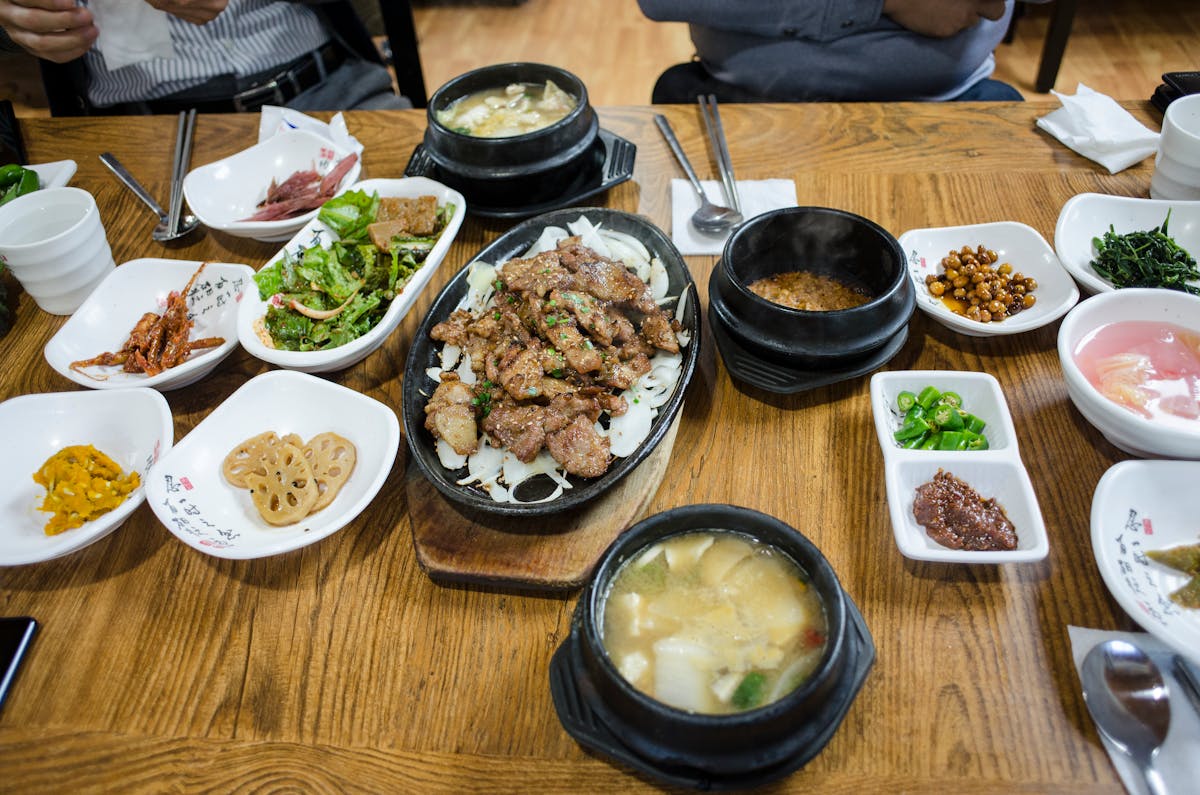

I don’t consider myself a street food person. Actually, that’s not entirely true — I just never really thought about it until a coworker asked me where to take her visiting cousin, and I realized I’d eaten my way through half of Jongno without ever stopping to think “this is street food.”
These are the things I actually eat. Not a tourist checklist, just stuff that exists near subway exits and markets and that I’ve been buying since forever.
Tteokbokki (떡볶이)
Start here. Always start here. Tteokbokki is chewy rice cakes in a spicy-sweet red sauce, and you’ll find it at almost every pojangmacha (street cart) near a market or school. The version at Gwangjang Market is different from the version outside Hongdae Station — the sauce varies wildly by vendor.
Price is usually around 3,000–5,000 won for a small container. You eat it standing up, with a plastic toothpick.
My biggest mistake was ordering the extra spicy version on my first week of eating spicy food again after a stomach issue. Don’t do that. The standard version is already pretty bold.
Hotteok (호떡)
A hotteok is a fried dough pancake filled with brown sugar, cinnamon, and crushed peanuts or seeds. It’s a winter food, honestly — I think it tastes better when it’s cold out, maybe because you’re holding it with both hands to warm up.
You’ll see hotteok carts around Insadong and near Namdaemun Market most reliably. Around 1,500–2,000 won each. Watch out: the inside filling is basically molten sugar for the first two minutes. I burned my tongue badly once because I got impatient. Just wait a bit.
Odeng / Eomuk (오뎅/어묵)
This one I pass by every cold morning near my office exit. Fish cake skewers sitting in a warm broth — the broth is free, you drink it from a little paper cup. The skewers themselves are 500–1,000 won each depending on the cart.
Eomuk is the technically correct term but everyone I know says odeng (a Japanese-origin word that stuck). It’s mild, slightly savory, and you eat three of them before you realize you’ve had a whole snack. The broth is surprisingly good. Don’t skip it.
Gimbap (김밥)
Gimbap is seaweed rice rolls, sliced into rounds. It looks like sushi but it’s not sushi — the rice isn’t seasoned with vinegar, and the fillings are things like spinach, egg, carrot, and canned tuna or bulgogi. You find it at gimbap joints (김밥집) everywhere, not just street carts.
A full roll is usually 2,500–4,000 won. You can eat it walking. I’ve had gimbap for breakfast, lunch, a late-night snack, a hangover solution. It genuinely works for all occasions.
Twigim (튀김) — Street Fried Things
At most tteokbokki carts, there’s a section with fried things: vegetables, squid, sweet potato, glass noodle rolls. This is twigim. You pick what you want, they go in the fryer, and you often dip them in the tteokbokki sauce.
A few pieces run 500–1,000 won each. The glass noodle rolls (당면 튀김) are particularly good — crunchy outside, chewy inside.
Dakkochi (닭꼬치)
Grilled chicken skewers, glazed with either a sweet soy sauce or a spicy sauce. You’ll see these near universities and late-night markets. Around 2,000–3,000 won per skewer.
When I first visited the stall near Sinchon station years ago, I was surprised to find that the spicy version was actually the milder one somehow — the vendor explained she adjusts for the students. I haven’t figured out if that’s a Sinchon thing or just that particular stall.
Bungeo-ppang (붕어빵)
Fish-shaped pastries filled with red bean paste. The “fish” shape is just mold design — there’s no fish in it. These are seasonal (autumn through late winter) and feel genuinely nostalgic even to me, which is kind of a big deal here culturally. Old people and young people alike stop for bungeo-ppang.
Two or three for 1,000 won. Custard cream versions also exist now. Honestly I still prefer the red bean original.
Gyeranppang (계란빵)
Egg bread. A small oval bread baked with a whole egg in the center. It sounds weird but it works — slightly sweet bread, savory egg, all in one palm-sized thing. Great for 5pm when you missed lunch. Around 1,500–2,000 won each.
I’m not sure how to explain this in English, but gyeranppang has a specific texture that’s different from regular bread — denser, a little more moist, and you can eat it in four bites.
Sundae (순대)
Not the ice cream — this is a Korean blood sausage made from glass noodles, vegetables, and sometimes barley, stuffed into intestine casing and steamed. It sounds alarming if you’ve never had it. It tastes like a mild, chewy sausage with a slightly earthy finish.
Usually served with a small pile of chopped liver and dusted with salt and chili powder. A small portion at a market stall is around 3,000–5,000 won. Gwangjang Market has been making this forever and is worth a visit specifically for it.
Corn Dogs (핫도그)
Korean corn dogs are not what Americans think of. The coating is thicker, sometimes includes rice flour for chewiness, and you can get versions with mozzarella stretched inside, coated in crushed ramen or french fry bits. Myungrang Hot Dog is one of the chains you’ll see near busy subway stations.
Around 2,500–4,000 won depending on what’s in it. The half-and-half (half sausage, half mozzarella) is the classic order. Dip in ketchup and mustard — or sugar, which sounds weird but is actually not bad. It works. I can’t fully defend it but I keep doing it.
Tteok (떡) — Plain Rice Cakes
If you see a stall with colorful flat cakes or sweets dusted with rice powder, that’s tteok. These aren’t spicy — they’re the sweet, ceremonial side of Korean rice cake culture. Some are filled with red bean, some with sesame, some with nothing.
Markets sell them in small bags for around 3,000–6,000 won. Gwangjang Market and Namdaemun both have tteok vendors. Good for buying a small amount without committing to a whole box.
Nokdu Bindaetteok (녹두 빈대떡)
Mung bean pancakes, pan-fried until crispy on both sides. These are heavier than they look. Usually the size of your palm, made with ground mung beans mixed with kimchi, pork, or vegetables.
A piece at Gwangjang Market runs around 4,000–5,000 won. I go there maybe twice a year with coworkers on a Friday and we always get these. They go well with makgeolli (raw rice wine) — which is also available right there at the market stalls.
Grilled Corn (구운 옥수수)
Summer only. Grilled or steamed corn on the cob, sometimes brushed with butter and salt. You’ll see these carts near parks and riversides in July and August. Around 2,000–3,000 won each.
Korean corn tends to be starchier and less sweet than the American sweet corn variety. Different texture. Some people find it disappointing if they’re expecting the American version. I actually prefer it — it feels more like actual food.
Pajeon or Haemul Pajeon (파전/해물파전)
Green onion pancakes, sometimes with seafood (haemul means seafood). You’ll find these at sit-down pojangmacha tents at markets more than at walking carts — it’s more of a “sit and eat” item. Split a large pajeon with a friend for around 8,000–12,000 won.
The dipping sauce is soy sauce mixed with vinegar and a bit of chili. Eat it hot. Cold pajeon loses most of its appeal.
Soondae Guk (순대국)
This is not street food exactly — but many market stalls serve this as a sit-down bowl alongside the standing snacks. Pork offal soup with sundae, rice, and broth. Around 8,000–10,000 won. If you’re at a market and it’s cold and you’ve been walking for two hours, this is the answer.
The soup looks murky and a bit scary. Tastes deep and savory. Add the salt shaker on the table slowly — it’s more powerful than you expect.
Where to Actually Find All of This
Gwangjang Market (광장시장): probably the best concentration of all of the above in one place. It’s in Jongno, about 5 minutes from Jongno 5-ga Station (exit 8). The covered market is open from around 10am and the eating area runs until late evening. Some stalls close around 9pm, some go until midnight.
Namdaemun Market: similar, slightly more varied in what it sells. Gets very busy on weekday afternoons.
Near subway exits in Hongdae, Sinchon, and Mangwon: rotating carts that change with the season. No specific vendor to point to — you’ll see them.
My go-to route when I take people around: Jongno 5-ga → Gwangjang Market → walk through to Cheonggyecheon nearby if it’s evening. You can eat for two people for under 30,000 won and be full.
Last verified: May 2026. Information confirmed through direct experience and current sources. Something changed? Leave a comment and I’ll update it.

About Jay Han
Jay has lived in Seoul for over 10 years and works as a marketing professional. He started Korea Hub to share the kind of honest, specific information he wishes he’d had when navigating Korean culture, food, and travel for the first time. Not a travel blogger — just someone who actually lives here.
Street food is where I do most of my actual eating when I’m walking around. My tteokbokki order at a specific cart near Sindorim has been essentially the same for seven years.
More about Jay →