
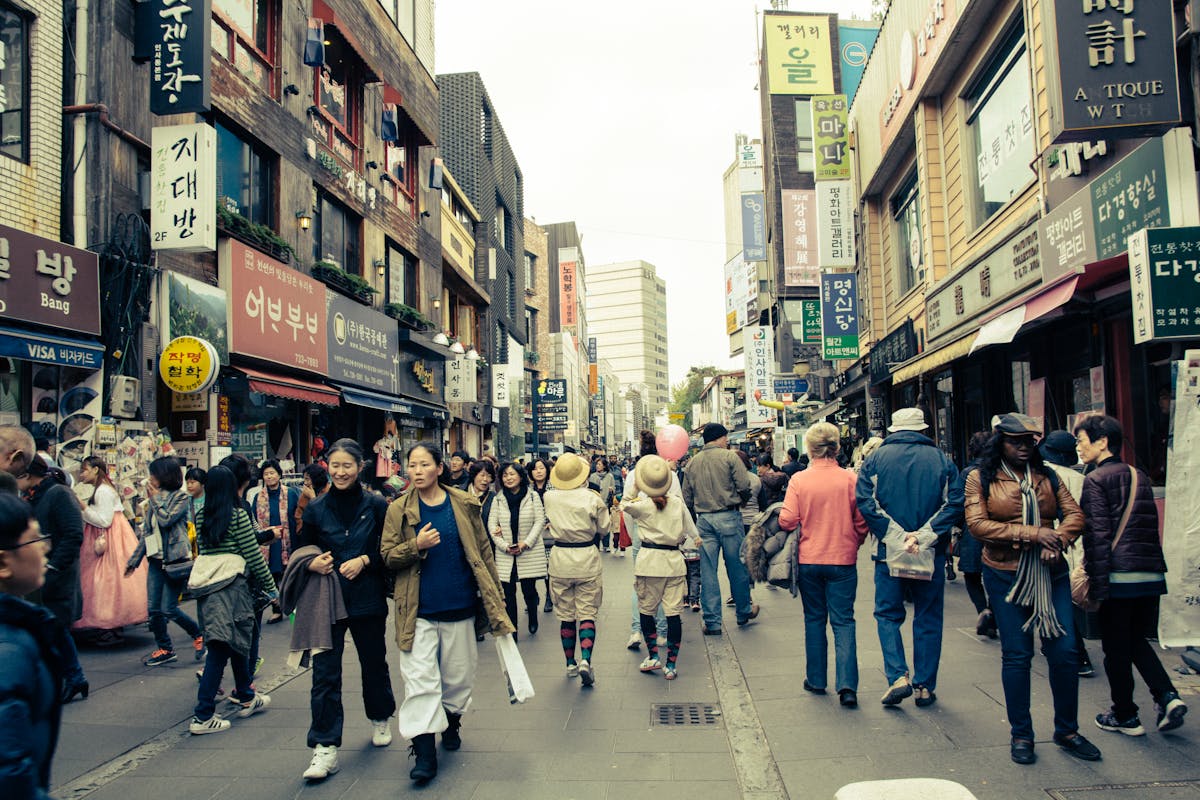
When I first moved to Seoul, I spoke zero Korean. Not even the basics—I couldn’t read the alphabet, couldn’t say hello without looking it up, had to point at everything in restaurants and hope for the best. And I want to be honest with you: for most tourist situations, you can get by that way. English signage in Seoul is genuinely good. Many younger Koreans speak conversational English. Translation apps work well enough.
But here’s what I noticed, even in my first few weeks: the moment you attempt Korean—even badly—something changes. The slightly guarded restaurant owner who had clocked me as a clueless foreigner became warmer when I said “jal meogeosseumnida” (I ate well, thank you) as I left. It wasn’t magic. His whole face just… shifted. He smiled, said something warm in Korean that I didn’t understand, and waved me out like I was a regular.
Language is connection. These 50 phrases won’t make you fluent. But they’ll get you a long way—and they’ll change how people respond to you.
🔊 Quick Pronunciation Guide
Korean has some sounds that don’t exist in English. Don’t stress about perfection—Koreans are genuinely patient with foreigners trying. Just attempt it.
| Korean | Approximate Sound | Notes |
|---|---|---|
| ㅇ | Silent at start, “ng” at end | 안 = “an” |
| ㅎ | “h” but softer | |
| ㄱ | Between “g” and “k” | Context-dependent |
| 어 | Like “uh” in “huh” | |
| 으 | No English equivalent — like “eu” | Unique to Korean |
Learning Hangul (the Korean alphabet) in a few hours is genuinely possible—it’s a phonetic system, not characters. Even basic reading ability helps you navigate menus and signs better than any translation app.
👋 Basic Greetings and Courtesy
| Korean | Romanization | Meaning |
|---|---|---|
| 안녕하세요 | Annyeonghaseyo | Hello (polite) |
| 감사합니다 | Gamsahamnida | Thank you (formal) |
| 고마워요 | Gomawoyo | Thank you (casual) |
| 죄송합니다 | Joesonghamnida | I’m sorry / Excuse me |
| 괜찮아요 | Gwaenchanayo | It’s okay / No problem |
| 안녕히 계세요 | Annyeonghi gyeseyo | Goodbye (to someone staying) |
| 안녕히 가세요 | Annyeonghi gaseyo | Goodbye (to someone leaving) |
| 네 | Ne | Yes |
| 아니요 | Aniyo | No |
| 잘 먹겠습니다 | Jal meokgesseumnida | I will eat well (before a meal) |
| 잘 먹었습니다 | Jal meogeosseumnida | I ate well (after a meal) |
My Tip: “Annyeonghaseyo” with a small bow—not deep, just a slight incline of the head—is your universal greeting. Use it everywhere: shop staff, hotel receptionists, restaurant owners, taxi drivers. The effort lands every single time.
The before/after meal phrases are worth knowing specifically. Saying “jal meokgesseumnida” when food arrives and “jal meogeosseumnida” when you leave is a genuine cultural gesture. The reaction you get makes it worth the practice.
🛒 Shopping
| Korean | Romanization | Meaning |
|---|---|---|
| 얼마예요? | Eolmayeyo? | How much is this? |
| 너무 비싸요 | Neomu bissayo | It’s too expensive |
| 이거 주세요 | Igeo juseyo | I’ll take this one, please |
| 봐도 돼요? | Bwado dwaeyo? | Can I look at it? |
| 영수증 주세요 | Yeongsujeung juseyo | Receipt, please |
| 신용카드 돼요? | Sinyongkadeu dwaeyo? | Do you accept credit card? |
| 할인 돼요? | Halin dwaeyo? | Is there a discount? |
| 다른 색깔 있어요? | Dareun saekkal isseoyo? | Do you have other colors? |
The discount question (할인 돼요?) is useful in markets like Namdaemun or Dongdaemun where some negotiation is expected. At fixed-price stores and restaurants, don’t bother—there’s no flexibility. Reading the context matters.
🍽️ Food and Restaurants
| Korean | Romanization | Meaning |
|---|---|---|
| 메뉴 주세요 | Menyu juseyo | Menu, please |
| 이게 뭐예요? | Ige mwoyeyo? | What is this? |
| 맵지 않게 해주세요 | Maepji anke haejuseyo | Please make it not spicy |
| 맛있어요 | Massisseoyo | It’s delicious |
| 더 주세요 | Deo juseyo | More, please |
| 물 주세요 | Mul juseyo | Water, please |
| 계산서 주세요 | Gyesanseo juseyo | The bill, please |
| 포장해 주세요 | Pojanghaejuseyo | To go / wrap it up, please |
| 채식주의자예요 | Chaesikjuuijayeyo | I’m vegetarian |
| 알레르기가 있어요 | Allereugiwa isseoyo | I have allergies |
Vegetarian note: Being vegetarian in Korea is genuinely challenging. Korean cuisine uses broth and small amounts of meat in many dishes that appear vegetable-based. The phrase above helps, but be prepared for occasional confusion—”no meat” may be interpreted differently than you intend. In Buddhist temple restaurants (사찰음식 — sachal eumsik) and dedicated vegetarian spots, you’re fine. Elsewhere, be specific.
🚇 Transportation
| Korean | Romanization | Meaning |
|---|---|---|
| [장소]에 가주세요 | [Jangso]-e gajuseyo | Please take me to [place] |
| 지하철역이 어디예요? | Jihacheol yeogi eodiyeyo? | Where is the subway station? |
| 버스 정류장이 어디예요? | Beoseu jeongnyujang i eodiyeyo? | Where is the bus stop? |
| 여기서 세워주세요 | Yeogiseo seowojuseyo | Please stop here (for taxis) |
| 얼마나 걸려요? | Eolmana geollyeoyo? | How long does it take? |
| 길을 잃었어요 | Gireul ireosseoyo | I’m lost |
For taxis, showing the destination address on your phone (in Korean if possible) is more reliable than trying to pronounce neighborhood names. Most Kakao T drivers can read Korean addresses on your screen without any verbal communication needed.
🏨 Accommodation
| Korean | Romanization | Meaning |
|---|---|---|
| 체크인 하고 싶어요 | Cheukeukin hago sipeoyo | I’d like to check in |
| 예약했어요 | Yeyakhaesseoyo | I have a reservation |
| 방이 있어요? | Bangi isseoyo? | Do you have a room? |
| 와이파이 비밀번호가 뭐예요? | Waipai bimilbeonhoga mwoyeyo? | What’s the WiFi password? |
| 에어컨 좀 켜 주세요 | Eeokon jom kyeo juseyo | Please turn on the A/C |
🆘 Emergency and Practical Situations
| Korean | Romanization | Meaning |
|---|---|---|
| 도와주세요! | Dowajuseyo! | Please help me! |
| 병원이 어디예요? | Byeongwoni eodiyeyo? | Where is the hospital? |
| 약국이 어디예요? | Yakgugi eodiyeyo? | Where is the pharmacy? |
| 경찰을 불러주세요 | Gyeongchareul bulleoJuseyo | Please call the police |
| 화장실이 어디예요? | Hwajangsili eodiyeyo? | Where is the bathroom? |
| 영어를 할 줄 아는 분 있나요? | Yeongeoreul hal jul aneun bun innayo? | Is there anyone who speaks English? |
Emergency numbers: 112 (police), 119 (fire/ambulance). Tourist emergency line with English: 1330—available 24 hours.
💬 Useful Conversation Starters
| Korean | Romanization | Meaning |
|---|---|---|
| 한국어를 잘 못해요 | Hangugeo reul jal motaeyo | I’m not good at Korean |
| 천천히 말해 주세요 | Cheoncheonhi malhae juseyo | Please speak slowly |
| 다시 말해 주세요 | Dari malhae juseyo | Please say that again |
| 이해 못했어요 | Ihae motaesseoyo | I didn’t understand |
| 모르겠어요 | Moreugeseoyo | I don’t know |
| 반갑습니다 | Bangapseumnida | Nice to meet you |
🍺 Food and Drinks Worth Knowing
| Korean | Romanization | Meaning |
|---|---|---|
| 아메리카노 | Amerikano | Americano coffee |
| 소주 한 잔 | Soju han jan | One glass of soju |
| 맥주 주세요 | Maekju juseyo | Beer, please |
| 건배! | Geonbae! | Cheers! |
| 배고파요 | Baegopayo | I’m hungry |
💡 A Few Notes on Using These Phrases
Korean has formal and informal registers—the phrases above are mostly polite/formal, which is what you want with strangers and service staff. You won’t cause offense by being too polite. You might cause slight confusion by being too casual, but it’s not a serious issue.
Bowing when greeting or thanking someone is part of how the phrases land. Nothing dramatic—a slight forward incline of the head and shoulders. It completes the interaction in a way that feels natural once you’re a few days in.
Download Papago (Naver’s translation app)—it’s more accurate than Google Translate for Korean, especially for conversational phrases and signs. The camera translation function works well for menus.
And honestly—just try. Mispronouncing something won’t cause offense. Getting halfway through a phrase and laughing at yourself is a form of connection too. Koreans generally appreciate the effort, even when the execution is imperfect.
📱 Apps That Work Alongside Your Phrases
Papago (파파고): Naver’s translation app—significantly more accurate than Google Translate for Korean, especially for conversational phrases, menus, and signs. The camera function works reasonably well for reading text in photos. Download this before you arrive.
Google Translate: Fine for a second opinion, but Papago first for Korean. The Google Translate conversation mode works acceptably if you need real-time back-and-forth with someone who doesn’t speak English.
Naver Dictionary: Useful when you need to look up a specific word rather than translate a phrase. More comprehensive than Papago for individual vocabulary.
🔤 Learning Hangul: Actually Worth It
Korean uses its own alphabet (Hangul — 한글), developed in the 15th century specifically to be learnable. It’s phonetic, systematic, and genuinely learnable in a few hours. I mean that—not as a motivation speech, but as a practical statement.
Why it’s worth learning even for a short trip: menus, street signs, subway station names, directions—all of these become readable when you know the alphabet. You won’t understand the words, but you can sound them out. Many words in Korean are borrowed from English (아이스크림 = ice cream, 카페 = café, 컵 = cup), and being able to read them phonetically makes a surprising amount of signage navigable.
There are free Hangul learning videos on YouTube that cover all the letters in under 2 hours. Doing this in the week before you travel is one of the most practical investments of your trip preparation time.
💬 Cultural Context: How to Use These Phrases
Korean social interaction has layers of formality built into the language. The phrases in this guide are the polite/formal register (존댓말 — jondaemal), which is appropriate for all interactions with strangers, service staff, older people, or anyone you’ve just met. You cannot go wrong with this register.
Using informal Korean (반말 — banmal) with strangers can range from unnoticed to mildly rude depending on context and the age difference between you and the person you’re speaking to. As a foreign visitor, defaulting to formal speech is always the right call. The phrases above are all appropriate.
Related Posts:
- explore the must-try Korean dishes before your trip
- understand the real tipping rules in Korea
- pick the right Seoul neighborhood for your stay
Last verified: May 2026. Information confirmed through direct experience and current sources. If anything has changed, leave a comment and I’ll update it.

About Jay Han
Jay has lived in Seoul for over 10 years and works as a marketing professional. He started Korea Hub to share the kind of honest, specific information he wishes he’d had when navigating Korean culture, food, and travel for the first time. Not a travel blogger — just someone who actually lives here.
I remember spending my first year in Seoul nodding along to things I didn’t fully understand, then going home and looking everything up. Korean is genuinely difficult — but the 20 phrases I use most took me about two days to learn.
More about Jay →