
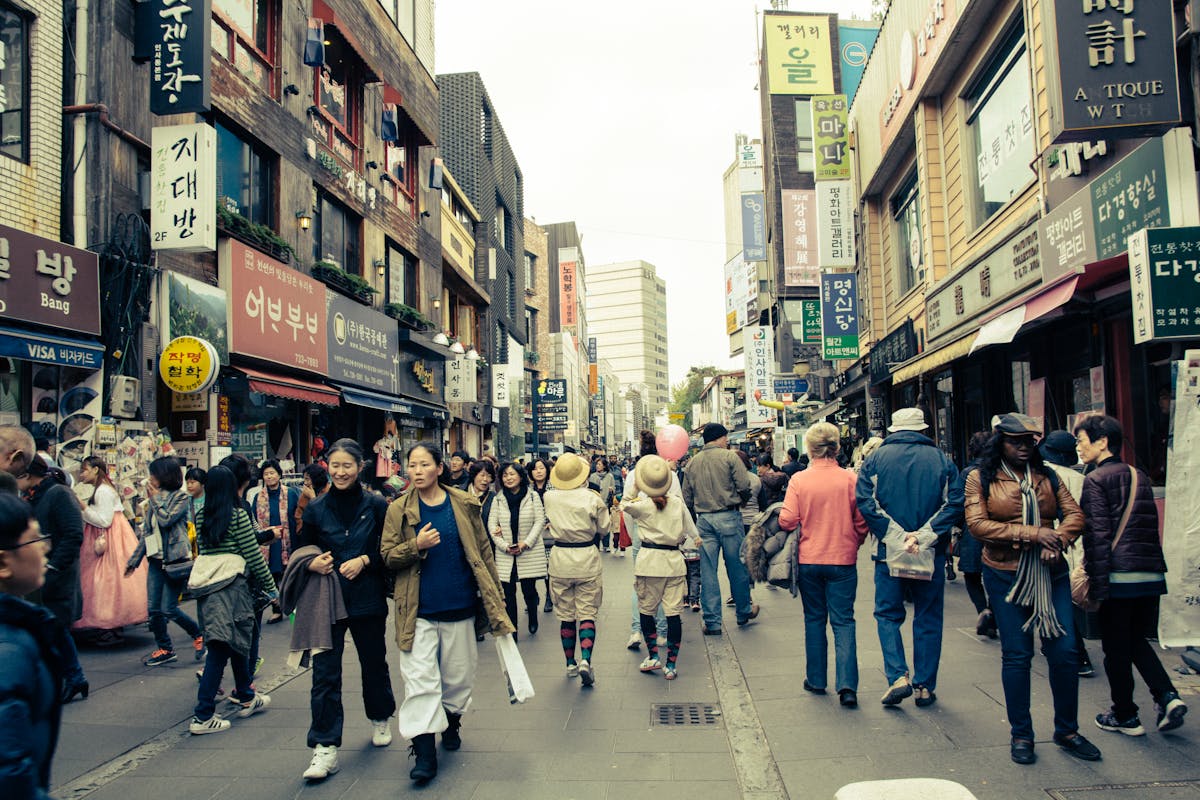
Here’s the thing about Korean phrases guides: most of them teach you words you will never actually use. “Where is the nearest post office?” — come on. When did you last visit a post office in your home country?
I’ve lived in Seoul for over ten years. Korean is my first language. So I’ll tell you what a tourist actually needs, and I’ll be honest about when Google Translate is the better option.
Before We Start: The Korean Writing System
Hangul — Korea’s alphabet — looks intimidating but you can learn to read it, at least phonetically, in about two hours. I’m serious. It’s one of the most logical writing systems ever designed. You don’t need to understand meanings; even being able to sound out words helps enormously with menus and signs.
If you have five hours before your trip, spend two of them on Hangul basics. There are free apps that teach this. The rest of the phrases below will make more sense if you can read the sounds.
The Absolute Essentials (Use These Daily)
These are the words I watch tourists actually need:
- 감사합니다 (Gam-sa-ham-ni-da) — Thank you (formal). Use this everywhere. Restaurants, shops, taxi, convenience store. It’s never wrong. People appreciate it.
- 안녕하세요 (An-nyeong-ha-se-yo) — Hello. Works morning, noon, night. Standard greeting.
- 주세요 (Ju-se-yo) — Please give me / I’d like this. Point at menu + “ju-se-yo” = ordering done. This is the most useful two-syllable phrase in Korea.
- 얼마예요? (Eol-ma-ye-yo?) — How much is this? Works everywhere. Though prices are usually visible, this is useful at markets.
- 이거 (I-geo) — This one. Point at thing + “이거 주세요” = you’ve placed an order.
At Restaurants
Korean restaurants often have staff who won’t approach your table until you call them. This threw me at first too, even as a Korean — some of the new casual places switched to this style.
- 여기요 (Yeo-gi-yo) — Excuse me / Over here. Literally “here.” Call staff with this. Don’t snap fingers, don’t shout — this is the right way.
- 맛있어요 (Ma-si-sseo-yo) — It’s delicious. Staff genuinely light up when guests say this. Not mandatory, but kind.
- 물 주세요 (Mul ju-se-yo) — Water please. Many Korean restaurants have free water pitchers, but in sit-down places you sometimes need to ask.
- 계산해 주세요 (Gye-san-hae ju-se-yo) — Check please. You’ll need this — servers often don’t bring the bill automatically.
- 하나 더 (Ha-na deo) — One more. Great for ordering another beer, another side dish, another round.
- 안 맵게 해주세요 (An maep-ge hae-ju-se-yo) — Please make it not spicy. This is actually useful if you mean it, though results vary.
Shopping
- 이거 있어요? (I-geo i-sseo-yo?) — Do you have this? Use with a photo on your phone.
- 깎아주세요 (Kka-kka-ju-se-yo) — Please give me a discount. Only works at traditional markets, not regular stores. Don’t try this at a department store.
- 카드 돼요? (Ka-deu dwae-yo?) — Can I pay by card? Korea is extremely card-friendly, but small pojangmacha (street stalls) and older traditional restaurants sometimes still prefer cash.
- 영수증 필요 없어요 (Yeong-su-jeung pil-yo eops-eo-yo) — I don’t need a receipt. Cashiers often ask, this saves the exchange.
Getting Around
- _____ 어디예요? (_____ eo-di-ye-yo?) — Where is _____? Fill in any place name. “화장실 어디예요?” = Where is the bathroom?
- 화장실 (Hwa-jang-sil) — Bathroom. Know this one. Know it well.
- _____ 까지 가주세요 (_____ kka-ji ga-ju-se-yo) — Please take me to _____. For taxis, though most Seoul taxis now have apps or translation screens.
- 직진 (Jik-jin) — Go straight
- 우회전 (U-hoe-jeon) — Turn right
- 좌회전 (Jwa-hoe-jeon) — Turn left
I’ll be honest: for taxis and navigation, Kakao Maps with Korean place names typed in is more reliable than verbal communication. The phrases above are backup when your phone dies.
Related reading: Seoul Subway Guide for getting around without taxis at all.
Emergencies and Awkward Situations
- 도와주세요 (Do-wa-ju-se-yo) — Please help me.
- 병원 어디예요? (Byeong-won eo-di-ye-yo?) — Where is the hospital?
- 경찰 불러주세요 (Gyeong-chal bul-leo-ju-se-yo) — Please call the police.
- 모르겠어요 (Mo-reu-get-sseo-yo) — I don’t know / I don’t understand. Genuinely useful when someone is asking you something and you’re lost.
- 한국어 잘 못해요 (Han-guk-eo jal mot-hae-yo) — I don’t speak Korean well. This usually gets a sympathetic response and people will try their phone translators.
The Phrases That Sound Rude If You Get the Tone Wrong
This is actually important. Korean has formal and informal speech levels and mixing them incorrectly can come across as condescending to older people or rude to service staff.
For tourists: always use the formal endings. The phrases in this list all use formal speech. Don’t switch to informal “해” endings with strangers even if you’ve seen them in a drama — context matters.
Pronunciation Tips From Someone Who’s Watched Tourists Try
- The “eo” sound (어) is like the “u” in “but” — not like “ee-oh”
- Double consonants (ss, kk, pp) are sharper and tenser than singles
- Korean doesn’t stress syllables the way English does — keep it even
- The “r/l” sound (ㄹ) is somewhere between the two — don’t overthink it
Honestly, most Koreans will understand your attempt even with imperfect pronunciation. The effort matters more than the accuracy.
What to Do When You’re Completely Lost
Say: “파파고 써도 될까요? (Pa-pa-go sseo-do dwel-kka-yo?)” — Can I use Papago (Korean translation app)? This signals you’d like to use a translation app. Young people especially will immediately pull out their own phones and start translating back.
Google Translate works in Korea but Papago (by Naver) is more accurate for Korean specifically. Download both before you arrive.
The 10 Phrases Worth Memorizing for Real
If you only have 20 minutes:
- 감사합니다 — Thank you
- 안녕하세요 — Hello
- 주세요 — Please give me this
- 여기요 — Excuse me (at restaurants)
- 얼마예요? — How much?
- 화장실 어디예요? — Where’s the bathroom?
- 이거 — This one
- 계산해 주세요 — Check please
- 모르겠어요 — I don’t understand
- 맛있어요 — Delicious
These ten will cover maybe 80% of your daily interactions. Not joking.
Related: Korean Tipping Culture: Do You Tip in Korea? | T-Money Card Guide for Travelers
