
Korean Currency Guide: Money Exchange, Credit Cards & Payment Tips (2025)
The first time I tried to pay for something with a ₩50,000 note and get change, I stood there for a good thirty seconds confused about whether I’d given too much or not enough. The numbers in Korean won are big—like, five digits for lunch big—and your brain does a quick recalibration the first few days. Then it clicks and the system actually makes a lot of sense.
Here’s what you need to know about money in Korea before you arrive.
💵 Korean Won: The Basics
Korea’s currency is the Korean Won (원), written as ₩ or KRW. No cents, no smaller denominations—everything is in whole won. This is actually kind of refreshing once you’re used to it. No fumbling with coins worth fractions of a dollar.
Paper Bills
| Bill | Korean Name | Approx. USD | Who’s On It |
|---|---|---|---|
| ₩50,000 | 오만원 (o-man-won) | ~$37–38 | Shin Saimdang — artist, scholar, and one of the few women on currency worldwide |
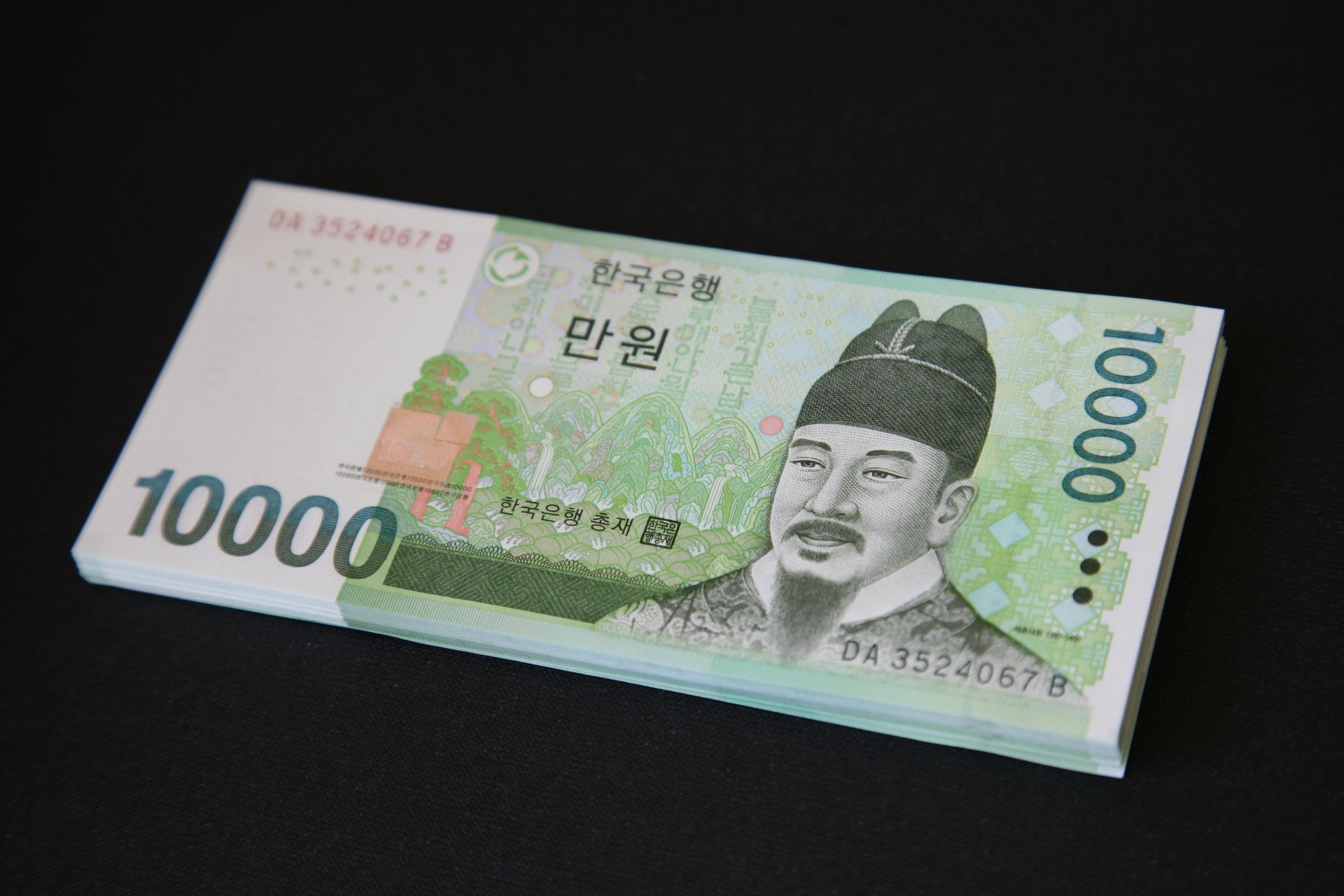
| ₩10,000 | 만원 (man-won) | ~$7.50 | King Sejong the Great |
| ₩5,000 | 오천원 (o-cheon-won) | ~$3.80 | Yi I (Confucian scholar) |
| ₩1,000 | 천원 (cheon-won) | ~$0.75 | Yi Hwang (Confucian scholar) |
The ₩10,000 note is your workhorse. Think of it like a $10 bill—you’ll go through a lot of them. The ₩50,000 is handy for bigger purchases but some smaller vendors prefer smaller bills, so don’t blow through all your ₩10,000 notes assuming you can always break a ₩50,000.
Coins
| Coin | Approx. USD | Practical Use |
|---|---|---|
| ₩500 | ~$0.38 | You’ll actually use these—vending machines, laundry |
| ₩100 | ~$0.08 | Accumulate quickly, mildly annoying |
| ₩50 | ~$0.04 | Rarely used, mostly just occupy your wallet |
| ₩10 | ~$0.01 | Essentially decorative at this point |
Honestly, I let the ₩10 and ₩50 coins pile up and then spend them at vending machines or just leave them. They’re not worth keeping track of actively.
💱 Where to Exchange Money
This is where a lot of travelers make a decision they later regret. Let me be direct: exchange money in Korea, not before you leave home. The rates at Korean exchange desks—especially in Myeongdong—are significantly better than what you’ll find at airport counters in the US, Europe, or Australia.
Best Exchange Options (Ranked)
1. Myeongdong Money Exchanges — The small private exchange counters clustered in Myeongdong are famous among expats for consistently good rates. They’re competitive with each other and clearly display their rates. This is where I send visitors who want the best deal. It takes about ten minutes and the savings on a $500 exchange can be meaningful.
2. KEB Hana Bank “Money Box” at Incheon Airport — Much better rates than the general airport counters. If you land at Incheon, look for this specifically rather than just going to the first exchange window you see. Exchange enough for your first day (taxi, food, transport), then do the rest in the city.
3. Bank Branches — Good rates but require your passport and sometimes a bit more time. Reasonable option if you’re near a major bank (Shinhan, KB Kookmin, Woori, Hana).
4. ATMs — Global ATMs (marked with Plus or Cirrus) work at most Korean bank ATMs, convenience store ATMs (7-Eleven, Emart24), and post office ATMs. Your bank will charge a foreign transaction fee—usually 1–3%—plus possibly a per-transaction fee. Check your card before you leave. Some accounts (Charles Schwab in the US, for example) reimburse ATM fees globally, which makes this option genuinely good.
Avoid: Airport general exchange counters for large amounts (rates are measurably worse), hotel exchanges (convenient but expensive), currency exchange apps with hidden margins.
⚠️ Note: Exchange rates fluctuate daily and my USD approximations above are rough. Check a live converter (Google “USD to KRW”) for current rates—don’t rely on any static guide for exact numbers.
💳 Credit Cards in Korea
Good news: Korea is very card-friendly. Visa and Mastercard are accepted almost everywhere in Seoul and major cities—restaurants, shops, convenience stores, most tourist sites. American Express is less widely accepted, so don’t rely on it as your only card.
Where cards are generally accepted:
- ✅ Restaurants (including most small places)
- ✅ Convenience stores (always)
- ✅ Department stores and malls
- ✅ Major tourist attractions
- ✅ Most taxis (via in-car card readers or KakaoTaxi)
- ✅ Hotels and guesthouses
Where you still need cash:
- ❌ Some traditional markets (Namdaemun, Gwangjang — not all stalls take cards)
- ❌ Street food vendors (most don’t)
- ❌ Small neighborhood restaurants and pojangmacha (street tents)
- ❌ Some small local shops outside of tourist areas
My honest advice: keep ₩50,000–₩100,000 in cash at all times in Seoul. You probably won’t need more than that on any given day unless you’re doing a big market run, but running out of cash at a street food stall is exactly the kind of avoidable frustration that ruins an afternoon.
📱 Mobile Payments in Korea
Korea has strong adoption of mobile payment systems—Samsung Pay, Kakao Pay, and Naver Pay are all common. If you have Apple Pay or Google Pay, acceptance depends on the terminal (some yes, some no—it’s not universal). The safest assumption is to have a physical card as backup.
Foreign-linked Apple Pay and Google Pay have been expanding in Korea, but I wouldn’t count on them exclusively. Card or cash as primary, mobile as a nice bonus when it works.
🏧 Using ATMs in Korea
Global ATMs (accepting foreign cards) are found at:
- 7-Eleven convenience stores — reliable, found everywhere
- Post office ATMs (우체국)
- Inside major bank branches
- Incheon Airport (multiple locations)
Look for the Plus, Cirrus, Visa, or Mastercard logo on the ATM. Most will have an English language option. Daily withdrawal limits vary by your home bank—check before you travel if you’re planning to withdraw large amounts.
One thing I learned the hard way: Korean ATMs sometimes ask if you want the exchange to happen in USD (at the ATM’s rate) or KRW (at your bank’s rate). Choose KRW. The ATM’s USD rate is almost always worse. This is called Dynamic Currency Conversion and it’s a trap.
💰 How Much Cash Do You Actually Need?
Rough daily budget ranges in Seoul, cash portion only (assuming you’re using cards for hotels and big purchases):
| Budget Level | Cash/Day (Approx.) | What It Covers |
|---|---|---|
| Budget traveler | ₩30,000–₩50,000 | Street food, convenience store meals, transport |
| Mid-range | ₩50,000–₩100,000 | Restaurant meals, occasional market, transport |
| Comfortable | ₩100,000–₩200,000 | Nicer restaurants, shopping, experiences |
These are rough—your actual spending depends on how much you eat out and whether you’re shopping. Seoul can be cheap or expensive depending entirely on your choices.
🧾 Quick Tips
- ✅ Exchange money in Myeongdong or at airport HanaBank for best rates
- ✅ Always carry ₩50,000–₩100,000 in cash for markets and street food
- ✅ Tell your bank you’re traveling to Korea before you leave (avoid blocked cards)
- ✅ When ATMs ask USD or KRW, always choose KRW
- ✅ Receipts are easy to get—keep them for expense tracking or reimbursement
- ❌ Don’t exchange at home before arriving—rates are nearly always worse
- ❌ Don’t rely solely on AmEx — acceptance is limited
The money situation in Korea is genuinely easy once you’ve done the first exchange. The won amounts look intimidating until about day two, and then dividing by roughly 1,300 becomes second nature. Enjoy the trip—and the street food that justifies keeping cash on hand.
Related Posts
- sort out your WiFi, SIM, and power adapters before landing
- save the Korea emergency numbers before you travel
- check if you need a visa before booking flights
Last verified: May 2026. Information confirmed through direct experience and current sources. If anything has changed, leave a comment and I’ll update it.

About Jay Han
Jay has lived in Seoul for over 10 years and works as a marketing professional. He started Korea Hub to share the kind of honest, specific information he wishes he’d had when navigating Korean culture, food, and travel for the first time. Not a travel blogger — just someone who actually lives here.
Korean won still trips people up because the numbers look so large. I remember my first week calculating everything in my head wrong and then being confused about what things actually cost.
More about Jay →