
Korean Currency Guide: Money Exchange, Credit Cards & Payment Tips (2025)
Planning a trip to Korea and wondering about money? This complete guide covers everything you need to know about Korean currency, where to exchange money, using credit cards, and practical payment tips to make your trip smoother.
As someone living in Seoul, I’ll share insider tips on getting the best exchange rates, where cards are accepted, and how much cash you actually need to carry.
💵 Korean Currency: The Won (₩)
Korea’s official currency is the Korean Won, written as ₩ or KRW.
Important: Korea does NOT use cents or smaller denominations—everything is in whole won amounts.
Korean Bills (Banknotes)
Korea has four paper bills, all featuring important historical figures:

| Bill | Korean Name | Approx. USD Value | Featured Figure |
|---|---|---|---|
| ₩50,000 | 오만원 (o-man-won) | ~$38 USD | Shin Saimdang (artist, scholar) |
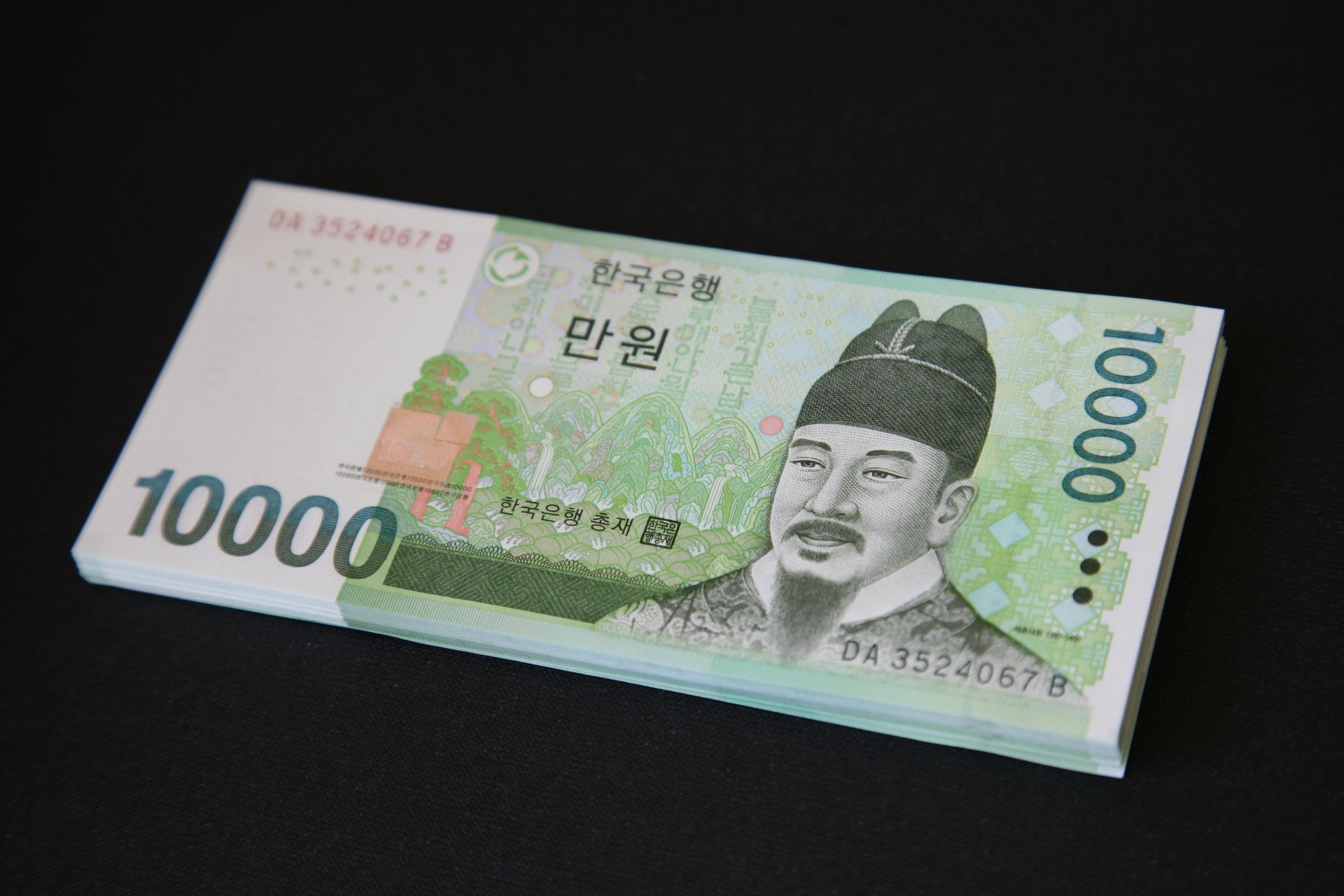
| ₩10,000 | 만원 (man-won) | ~$7.50 USD | King Sejong the Great |
| ₩5,000 | 오천원 (o-cheon-won) | ~$3.80 USD | Yi I (Confucian scholar) |
| ₩1,000 | 천원 (cheon-won) | ~$0.75 USD | Yi Hwang (Confucian scholar) |
Most Common Bill: The ₩10,000 note is like a $20 bill in the US—perfect for everyday purchases.
Fun Fact: Korea’s ₩50,000 bill is the highest denomination and features Shin Saimdang, making her one of the few women on currency worldwide.
Korean Coins
Korea has four coins in circulation:

| Coin | Korean Name | Approx. USD Value |
|---|---|---|
| ₩500 | 오백원 (o-baek-won) | ~$0.38 USD |
| ₩100 | 백원 (baek-won) | ~$0.08 USD |
| ₩50 | 오십원 (o-sip-won) | ~$0.04 USD |
| ₩10 | 십원 (sip-won) | ~$0.01 USD |
Pro Tip: You’ll accumulate coins quickly! Save them for:
- Convenience store snacks
- Public transportation (some buses accept coins)
- Vending machines
- Donation boxes at temples
What Happened to ₩1 and ₩5 Coins?
They’re no longer in circulation due to inflation. Prices are rounded to the nearest ₩10.
💱 Currency Exchange: Where & How
Best Places to Exchange Money in Korea
1. Banks (Most Reliable & Best Rates)
Banks offer the best exchange rates and are the safest option.
Operating Hours:
- Weekdays: 9:00 AM – 4:00 PM
- Closed: Weekends and public holidays
- Korea Post Bank: 9:00 AM – 4:30 PM (weekdays only)
Major Banks:
- KB Kookmin Bank
- Shinhan Bank
- Woori Bank
- Hana Bank
- Korea Post Bank
What You Need:
- Valid passport
- Foreign currency (cash)
My Experience:
I always tell friends visiting Korea to exchange money at banks. The rates are transparent, and you’ll avoid getting ripped off. Just go during weekday mornings to avoid lines.
2. Authorized Exchange Centers (Convenient but Slightly Higher Fees)
Found in tourist areas like Myeongdong, Hongdae, and Itaewon.
Pros:
- Open longer hours (some until 9-10 PM)
- Open on weekends
- Faster service (no banking paperwork)
Cons:
- Slightly worse exchange rates than banks (1-3% difference)
- Some places charge extra fees
Where to Find Them:
Look for signs saying “환전” (exchange) or “Money Exchange” in tourist districts.
Pro Tip: Compare rates at 2-3 exchange centers before committing. Rates can vary even on the same street!
3. Airport Exchange Counters (Convenient but Expensive)
Available At:
- Incheon International Airport (Terminals 1 & 2)
- Gimpo Airport
- Gimhae Airport (Busan)
- Jeju Airport
Pros:
- Super convenient (exchange right when you land)
- Open 24/7 at major airports
Cons:
- Worst exchange rates (3-5% worse than banks)
- Higher service fees
My Recommendation:
Exchange just ₩50,000-100,000 ($40-80 USD) at the airport for immediate expenses (transportation, first meal), then exchange the rest at a bank in the city for better rates.
4. Hotels (Last Resort)
Most hotels offer currency exchange, but rates are terrible—often 5-10% worse than banks.
Only use if:
- It’s an emergency
- Banks and exchange centers are closed
- You’re willing to lose money for convenience
Important Notes About Currency Exchange
⚠️ Old or Damaged Bills May Be Rejected
Some banks and exchange centers won’t accept old, torn, or heavily worn foreign currency. Make sure your bills are in good condition before traveling.
⚠️ Bring USD, EUR, JPY, or CNY for Best Rates
Major currencies get better exchange rates. Less common currencies (like Thai Baht, Philippine Peso) may have worse rates or limited availability.
⚠️ Don’t Exchange Money at Street Vendors
Illegal money changers exist in tourist areas—avoid them! You could receive counterfeit bills or get scammed.
💳 Using Credit Cards in Korea
Are Credit Cards Widely Accepted?
Yes! Korea is one of the most card-friendly countries in the world. Credit and debit cards are accepted almost everywhere, including:
✅ Hotels
✅ Department stores
✅ Restaurants (even small ones)
✅ Coffee shops
✅ Convenience stores
✅ Taxis (most accept cards now)
✅ Public transportation (T-money cards work like prepaid debit cards)
Accepted Cards:
- Visa
- Mastercard
- American Express (less common)
- JCB
- UnionPay (widely accepted due to Chinese tourism)
Where You’ll Need Cash
While cards work almost everywhere, you’ll still need cash for:
❌ Street food vendors (tteokbokki, hotteok, fish cakes)
❌ Traditional markets (Gwangjang Market, Namdaemun Market)
❌ Small local restaurants (especially outside Seoul/Busan)
❌ Some taxis (older drivers may prefer cash)
❌ Temple donations
❌ Public bathrooms (some charge ₩500-1,000)
❌ Coin-operated lockers (train/subway stations)
How Much Cash Should You Carry?
I recommend keeping ₩50,000-100,000 ($40-80 USD) in cash for daily expenses. Refill from ATMs as needed.
Foreign Transaction Fees
⚠️ Check with your bank before traveling!
Many credit cards charge 2-3% foreign transaction fees on every purchase abroad.
Best Cards for International Travel (No Foreign Fees):
- Chase Sapphire Preferred/Reserve
- Capital One Venture
- Discover it (also gives cash back overseas!)
My Tip:
Get a travel credit card with no foreign transaction fees before your trip. It’ll save you hundreds of dollars, especially on big purchases like hotels and shopping.
Using ATMs in Korea
Where to Find ATMs:
- Convenience stores (7-Eleven, CU, GS25)
- Bank branches
- Subway stations
- Shopping malls
ATM Fees:
- Korean bank fee: ₩3,000-5,000 (~$2-4 USD) per withdrawal
- Your bank’s fee: Varies (check before traveling)
Pro Tip: Withdraw larger amounts to minimize ATM fees. Most ATMs allow up to ₩700,000-1,000,000 per transaction.
Best ATMs for Foreigners:
- Global ATM (blue/red machines at convenience stores)
- KB Bank ATMs (English interface)
- Woori Bank ATMs
🏦 Quick Currency Conversion Reference
Use this as a rough guide (exchange rates fluctuate daily):
| Korean Won | USD | EUR | GBP |
|---|---|---|---|
| ₩1,000 | ~$0.75 | ~€0.70 | ~£0.60 |
| ₩5,000 | ~$3.80 | ~€3.50 | ~£3.00 |
| ₩10,000 | ~$7.50 | ~€7.00 | ~£6.00 |
| ₩50,000 | ~$38 | ~€35 | ~£30 |
| ₩100,000 | ~$75 | ~€70 | ~£60 |
Real-Time Currency Converter:
🌐 www.xe.com/currencyconverter
(Available in Korean, English, Japanese, Chinese, German, French, Spanish, Portuguese, Italian, Swedish, Arabic, Dutch)
Download the XE Currency App before your trip—it works offline and updates rates when you have WiFi.
💡 Smart Money Tips for Traveling in Korea
How Much Money Do You Need Per Day?
This depends on your travel style, but here’s a rough breakdown:
Budget Traveler:
- Accommodation: ₩30,000-50,000 (hostel/guesthouse)
- Food: ₩20,000-30,000 (street food, convenience stores, casual restaurants)
- Transportation: ₩5,000-10,000 (subway, buses)
- Attractions: ₩10,000-20,000
- Total: ₩65,000-110,000/day (~$50-85 USD)
Mid-Range Traveler:
- Accommodation: ₩80,000-150,000 (mid-range hotel)
- Food: ₩40,000-60,000 (mix of casual and nice restaurants)
- Transportation: ₩10,000-20,000 (taxis occasionally)
- Attractions/Shopping: ₩30,000-50,000
- Total: ₩160,000-280,000/day (~$120-210 USD)
Luxury Traveler:
- Accommodation: ₩200,000+ (luxury hotel)
- Food: ₩80,000+ (fine dining, cafés)
- Transportation: ₩30,000+ (taxis, private car)
- Shopping/Experiences: ₩100,000+
- Total: ₩400,000+/day (~$300+ USD)
Best Way to Pay in Korea
Here’s my recommended payment strategy:
✅ Daily Expenses (food, transport, shopping): Use a no-foreign-fee credit card
✅ Street food, markets, small vendors: Carry ₩50,000-100,000 cash
✅ Emergency backup: Keep ₩50,000 hidden separately
✅ Public transportation: Get a T-money card (rechargeable prepaid card)
Getting a T-Money Card (Must-Have for Travelers!)
What is T-money?
A rechargeable transportation card that works on:
- Subways (Seoul, Busan, Daegu, etc.)
- Buses
- Taxis
- Some convenience stores
- Coin lockers
Where to Buy:
- Convenience stores (₩2,500-4,000 for the card)
- Subway station vending machines
- T-money Center at major stations
How to Use:
- Buy the card
- Load money at convenience stores or subway machines
- Tap on card readers when entering/exiting transit
Pro Tip: You’ll save 10-20% on fares compared to single-ride tickets!
🚫 Common Money Mistakes Travelers Make
❌ Exchanging money at the airport for your entire trip → Exchange just enough for the first day
❌ Not checking credit card foreign fees → You could be losing 3% on every purchase
❌ Carrying too much cash → Korea is safe, but why risk it? Use cards when possible
❌ Not bringing small bills → ₩50,000 bills can be hard to break at small vendors
❌ Forgetting to notify your bank → Your card might get blocked for “suspicious activity”
✅ Final Money Checklist Before Your Korea Trip
Before you leave home:
✅ Notify your bank/credit card you’re traveling to Korea
✅ Get a credit card with no foreign transaction fees
✅ Check your daily ATM withdrawal limit
✅ Download XE Currency app for real-time exchange rates
✅ Bring clean, new foreign bills for exchange (no torn/old notes)
✅ Save ₩50,000-100,000 for day one (exchange at airport)
✅ Plan to exchange larger amounts at banks (better rates)
✅ Get a T-money card on arrival (convenience stores or subway)
My Personal Money Strategy in Korea
Here’s what I always tell first-time visitors:
- Exchange $100-150 at the airport for immediate needs
- Use credit card for hotels, restaurants, shopping (no foreign fees)
- Withdraw ₩200,000-300,000 from ATM every few days (minimize fees)
- Keep ₩50,000 cash on hand for street food and markets
- Get a T-money card immediately—you’ll use it every day
This strategy minimizes fees, maximizes convenience, and ensures you always have the right payment method.
Final Thoughts
Korea is incredibly easy to navigate when it comes to money. Credit cards work almost everywhere, ATMs are plentiful, and the won is straightforward to understand (no confusing decimals!).
The key is to exchange wisely (banks > exchange centers > airport), use a no-fee credit card, and keep some cash on hand for street food and markets.
One last tip: Don’t stress about having perfect exchange rates. The difference between the best and worst rates might only be a few dollars. Enjoy your trip—that’s worth way more than saving $5 on currency exchange!
Have questions about money in Korea? Drop them in the comments below!