
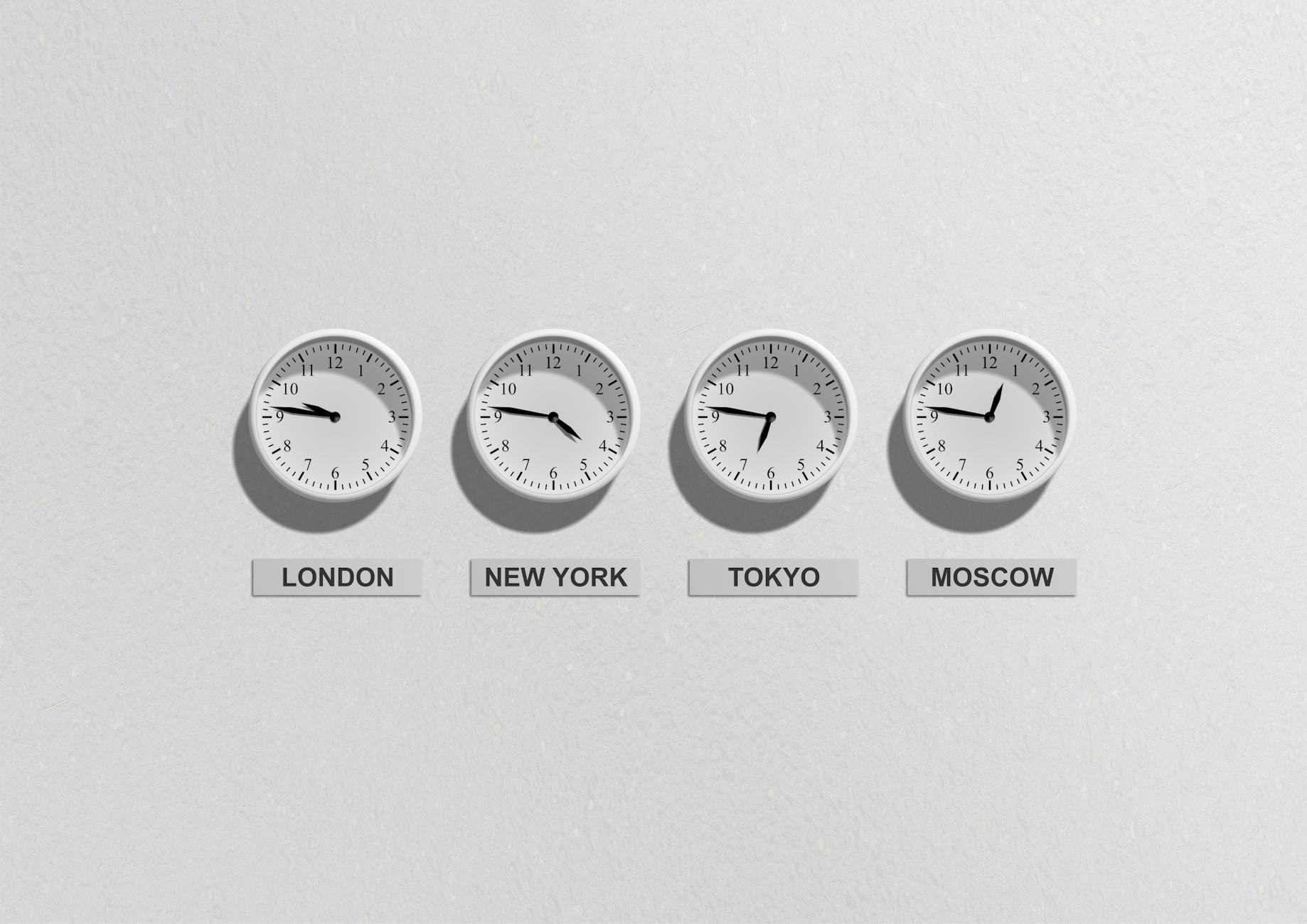
Korea Time Zone: Time Difference Between Seoul and Major Cities
If you’re planning a trip to Korea or trying to schedule a call with someone in Seoul, figuring out the time difference is—well, actually pretty simple once you know the one thing that matters: Korea doesn’t do daylight saving time.
That’s it. That’s the key detail. No clocks jumping forward or back. Korean Standard Time (KST) is UTC+9, year-round, always. Which means the math never changes on your end either, once you’ve done it once.
I’ve been living in Seoul for a few years now and I still occasionally confuse people back home because they forget we don’t change clocks here. Someone will text me “is this a good time to call?” in what they think is morning for me and it’s 11 PM. So: this guide exists.
🕐 What Time Zone Is Korea In?
- Korean Standard Time (KST)
- UTC+9 — 9 hours ahead of Coordinated Universal Time
- No Daylight Saving Time — ever, full stop
- Same time zone as Japan, and also East Timor (which, fair enough, most people don’t think about)
Current Seoul time: check here if you need a live clock.
🌏 Time Difference: Korea vs. Major Cities
Here’s the straightforward comparison table. The “difference” column shows how many hours Korea is ahead or behind each city—and I’ve noted which cities observe daylight saving time, because that’s where people get confused in summer versus winter.
Asia-Pacific
| City | Difference from Seoul (KST) | Notes |
|---|---|---|
| Tokyo, Japan | Same time (UTC+9) | Always identical |
| Beijing, China | -1 hour (UTC+8) | No DST |
| Hong Kong | -1 hour (UTC+8) | No DST |
| Singapore | -1 hour (UTC+8) | No DST |
| Bangkok, Thailand | -2 hours (UTC+7) | No DST |
| Jakarta, Indonesia | -2 hours (UTC+7) | No DST |
| New Delhi, India | -3.5 hours (UTC+5:30) | No DST — yes, really half an hour |
| Sydney, Australia | +1 hour (UTC+10) | ⚠️ Observes DST — can shift to +2 in southern summer |
| Auckland, New Zealand | +3 hours (UTC+12) | ⚠️ Observes DST — varies |
Europe
| City | Difference from Seoul (KST) | Notes |
|---|---|---|
| London, UK | -9 hours (UTC+0 / UTC+1 in BST) | ⚠️ Observes DST — so it’s -8 or -9 depending on season |
| Paris / Berlin / Amsterdam | -8 hours (UTC+1 / UTC+2 in CEST) | ⚠️ DST applies — difference varies by season |
| Moscow, Russia | -6 hours (UTC+3) | No DST since 2014 |
| Istanbul, Turkey | -6 hours (UTC+3) | No DST |
Americas
| City | Difference from Seoul (KST) | Notes |
|---|---|---|
| New York, USA (EST) | -14 hours (UTC-5) | ⚠️ -13 hours during EDT (summer) |
| Chicago, USA (CST) | -15 hours (UTC-6) | ⚠️ -14 hours during CDT |
| Los Angeles, USA (PST) | -17 hours (UTC-8) | ⚠️ -16 hours during PDT |
| Toronto, Canada | -14 hours (UTC-5) | ⚠️ Same DST pattern as New York |
| São Paulo, Brazil | -12 hours (UTC-3) | Brazil has historically changed DST rules—verify current year |
My Tip: When in doubt for US cities, just remember: Seoul is “yesterday’s tomorrow” relative to the US West Coast. If it’s Monday evening in Seoul, it’s Sunday in LA. This trips people up more than you’d think.
⏰ Quick Time Conversion Examples
Some practical examples for common scenarios:
- If it’s 9:00 AM in Seoul: it’s 8:00 AM in Tokyo, 1:00 AM in London (previous day), 8:00 PM in New York (previous day), 5:00 PM in Los Angeles (previous day)
- If it’s 12:00 PM (noon) in Seoul: it’s 3:00 AM in London, 10:00 PM in New York (previous day)
- If it’s 6:00 PM in Seoul: it’s 9:00 AM in London, 4:00 AM in New York
These shift by an hour or two during DST periods in those cities. Korea doesn’t shift. Keep that asymmetry in mind—the math changes for them, not for us.
✈️ Practical Tips for Travelers
Arriving in Korea: Jet Lag Reality
I’m not going to sugarcoat the jet lag from North America. It’s one of the harder adjustments because of how far the clocks are off. From the US East Coast you’re 13–14 hours different. From the West Coast, 16–17 hours. This means your body’s “2 AM” is Seoul’s lunchtime—and vice versa—for the first few days.
What actually helped me when I moved here: stay awake until at least 10 PM local time on your arrival day. Don’t nap. It’s brutal, but it resets faster. Melatonin helps if you use it. And honestly, a long walk after dinner does more than any supplement.
From Europe or Southeast Asia the adjustment is much gentler—1–3 hours at most. You might not even notice.
Calling Family or Friends Back Home
A few things worth knowing:
- ✅ Korea’s business hours (roughly 9 AM–6 PM KST) align with late evening in the US—which is actually fine for a quick “I’m alive” call before their bedtime
- ✅ Sunday morning in Seoul is Saturday evening in the Americas—decent overlap for calls
- ✅ If you need to catch someone in the US during their work hours, you’re looking at late evening or night in Korea (8 PM–2 AM KST for US daytime)
- ⚠️ During Korean DST-free months when Europe IS in DST, the gap from Seoul to Europe shrinks by 1 hour. Not a big deal but worth knowing if you’re doing regular calls.
Korea’s 24-Hour Culture
This is worth mentioning because it genuinely affects how the time zone feels when you’re here: Seoul runs on a 24-hour schedule in a way that most Western cities don’t. Convenience stores (CU, GS25, 7-Eleven) are open around the clock, actually around the clock. Plenty of restaurants in certain neighborhoods—Hongdae, Itaewon, parts of Gangnam—run until 2 or 3 AM or later on weekends.
So “what time does it close” is sometimes a less relevant question in Seoul than it would be in, say, London. I’ve shown up somewhere at 11:30 PM assuming it would be closed and found it half full. Takes some adjustment if you’re used to cities that shut down earlier.
📱 Recommended Apps for Time Zone Conversion
- World Clock (iOS/Android built-in) — good enough for most purposes
- Time.is — browser-based, accurate, simple
- World Time Buddy — best if you’re coordinating across multiple time zones at once (I use this for work calls)
- Google search — just type “Seoul time now” and it shows you a live clock. No app needed.
📋 Quick Reference Summary
| Korea (KST) | New York (EST) | London (GMT) | Sydney (AEDT) | Tokyo (JST) |
|---|---|---|---|---|
| 12:00 AM (midnight) | 10:00 AM (prev day) | 3:00 PM (prev day) | 1:00 AM | 12:00 AM |
| 6:00 AM | 4:00 PM (prev day) | 9:00 PM (prev day) | 7:00 AM | 6:00 AM |
| 9:00 AM | 7:00 PM (prev day) | 12:00 AM | 10:00 AM | 9:00 AM |
| 12:00 PM (noon) | 10:00 PM (prev day) | 3:00 AM | 1:00 PM | 12:00 PM |
| 6:00 PM | 4:00 AM | 9:00 AM | 7:00 PM | 6:00 PM |
| 9:00 PM | 7:00 AM | 12:00 PM (noon) | 10:00 PM | 9:00 PM |
⚠️ Note: These times use standard (non-DST) values. For cities that observe DST, adjust by +1 hour during their summer period. Korea doesn’t change, so the adjustment is always on their side.
That should cover most of what you need. If you’re still confused about a specific city combination, just drop it into Google or World Time Buddy—honestly faster than me trying to anticipate every possible pairing. The important thing is: Korea, UTC+9, never changes. Build from that.
📞 Quick Reference: Calling Korea from Abroad
If you need to call a Korean number from outside Korea, the format is: +82 then drop the leading 0 from the local number. So 02-1234-5678 (Seoul landline) becomes +82-2-1234-5678. Mobile numbers starting with 010 become +82-10-xxx-xxxx.
From within Korea, just dial the full number including the area code. For Seoul numbers that start with 02, you dial 02 even from within Seoul—unlike some countries where you drop the area code when calling locally.
Korea’s country code is +82. Worth having this handy if you’re calling ahead to hotels, restaurants, or services before arrival.
Related Posts
- sort out your WiFi, SIM, and power adapters before landing
- save the Korea emergency numbers before you travel
- plan around Korean public holidays to avoid surprises
Last verified: May 2026. Information confirmed through direct experience and current sources. If anything has changed, leave a comment and I’ll update it.

About Jay Han
Jay has lived in Seoul for over 10 years and works as a marketing professional. He started Korea Hub to share the kind of honest, specific information he wishes he’d had when navigating Korean culture, food, and travel for the first time. Not a travel blogger — just someone who actually lives here.
Time zone questions come up constantly when I’m arranging calls with people overseas. I’ve made the mistake of miscalculating the KST offset more than once, which is part of why I made sure to get this right here.
More about Jay →