
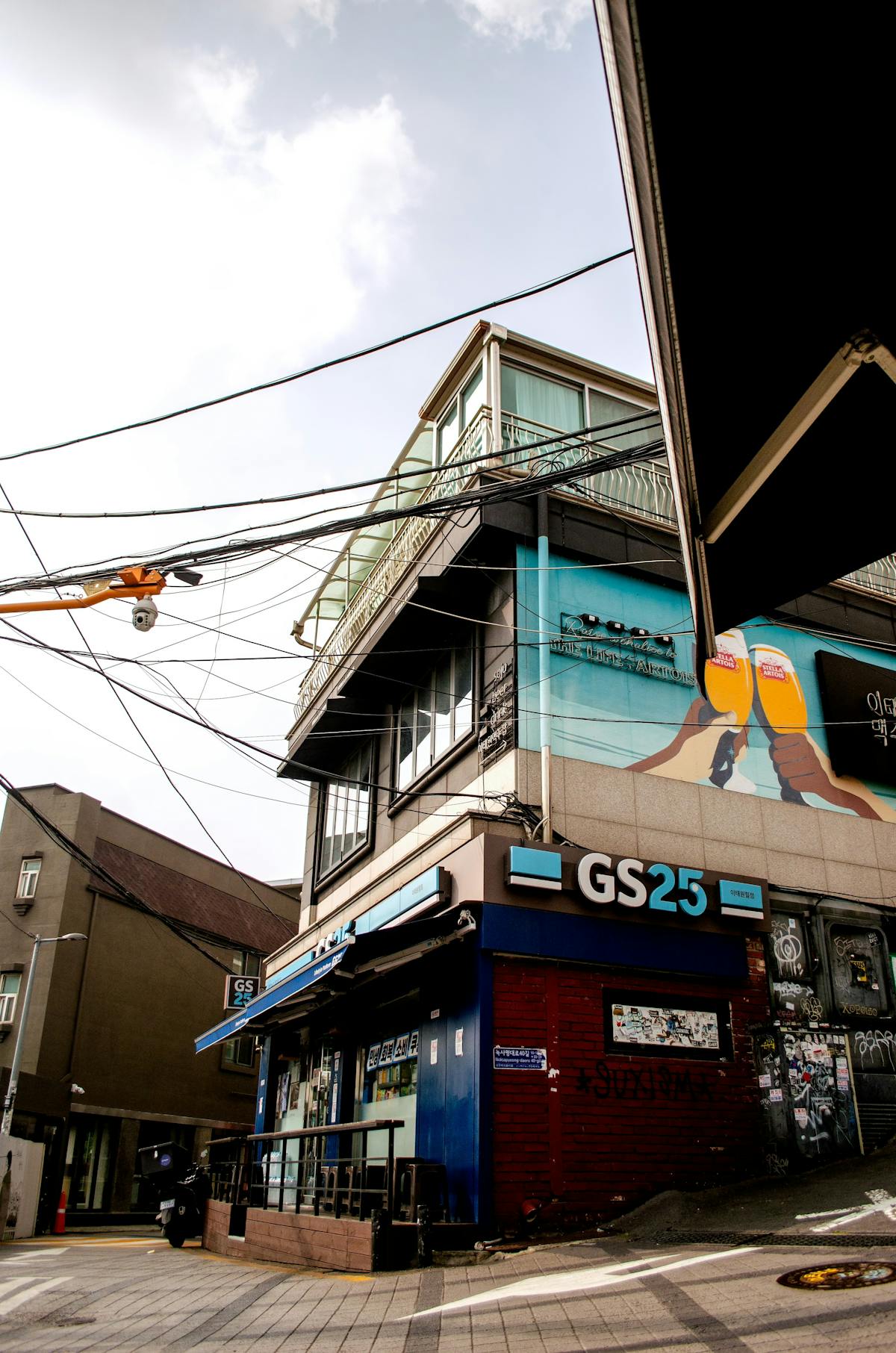
I want to be direct about this from the start: writing about Itaewon in 2025 requires acknowledging what happened there in October 2022. A crowd crush on Halloween night killed 159 people. It was a devastating event that affected the neighborhood permanently, and writing a tourism guide without naming it would be the wrong kind of careful.
With that said—Itaewon is still a neighborhood where people live, work, and gather. It has changed. It’s quieter in some ways, finding its footing in others. For certain kinds of travelers, it still offers something genuinely distinct in Seoul. Here’s the honest version of what it is now.
🌍 What Made Itaewon Different
Itaewon grew up around the US military base at Yongsan Garrison, and that history shaped a neighborhood unlike anywhere else in Seoul. The presence of a large American military community created demand for things that didn’t exist in the rest of the city—international food, English-speaking staff, bars that catered to people far from home. Over decades, that foundation attracted expats from every country, an LGBTQ+ community that found space here it couldn’t find elsewhere in Korea, Muslim communities centered around the grand mosque on the hillside, and travelers who wanted Seoul without the language barrier.
That character hasn’t disappeared. The halal restaurants around the mosque are still there and they’re still good. The bars along the main strip are still open. The international community—the people who made this neighborhood—is still here, living in a place that’s genuinely trying to figure out what it becomes next.
🍽️ The Food Scene: Still the Real Draw
Itaewon’s food diversity is real and remains one of its strongest reasons to visit. Within a few blocks, you can eat your way through a significant portion of the world—genuinely, not in the watered-down tourist-facing way that “international” often means in cities.
What’s worth seeking out:
- Mexican food: Several spots with actual corn tortillas and real salsas—not the approximations you find elsewhere in Seoul. The Mexican community that built these restaurants is real and the food shows it.
- Middle Eastern and halal restaurants: Concentrated near the central mosque (Itaewon-dong), these have been here for decades and serve the actual communities from those countries. The difference between food for expats versus food for tourists is noticeable.
- American-style brunch: Better in Itaewon than almost anywhere else in Seoul. Proper egg dishes, actual bacon, competent coffee, the full morning experience.
- Indian food: Several solid options along the main strip—better than you’d expect, worse than Mumbai, but genuinely good in a Seoul context.
- Thai, Vietnamese, Turkish: All represented with establishments that have served the local expat community long enough to have actual regulars.
This is the version of Itaewon worth visiting for: restaurants that serve actual communities from their countries of origin, not performances of internationalism for tourists who can’t tell the difference. The food is better here for exactly this reason.
🌙 Nightlife in 2025: The Complicated Part
Itaewon’s nightlife has recovered—but it’s different, and honestly it’s complicated to describe.
The crowd crush happened on the narrow alley (Hamilton Hotel area). The city has since implemented crowd management measures: improved lighting, width restrictions, emergency response protocols, and monitoring during peak periods. The infrastructure around the area has changed visibly.
Emotionally and culturally, the nightlife scene is different from before 2022. Halloween in particular is a fraught date for the neighborhood. Some venues have permanently closed. The energy that used to define Saturday nights there has shifted—partially to neighboring Hannam-dong and to Sangsu and Mapo-gu, which have absorbed some of what Itaewon exported.
The LGBTQ+ venues on the hill known as “Homo Hill” are still operating. This remains one of the few visible LGBTQ+ spaces in Seoul and continues to serve that community. The international bar scene on the main strip is active, particularly Thursday through Saturday.
If you’re going for nightlife: it’s manageable, the options are good, and the neighborhood still has a character that you won’t find in Hongdae or Gangnam. Just go in with realistic expectations about what it is now versus what it was five years ago.
🏘️ Itaewon’s Sub-Neighborhoods
The area most people call “Itaewon” is actually several distinct pockets:
Itaewon-dong (main strip): The bars, clubs, and international restaurants along the main road. Tourist-facing and international-facing in equal measure.
Haebangchon (해방촌 — HBC): The hillside neighborhood just west of the main Itaewon strip—a completely different character. Smaller, more local, less touristy. Independent cafés, small galleries, Korean and international residents living mixed together in a way that feels less performed than the main strip. This area came through 2022 without the same associations and has a genuinely good energy.
Hannam-dong (한남동): The upscale eastern extension of the Itaewon area—high-end restaurants, concept stores, the Leeum Samsung Museum of Art. Has absorbed significant restaurant and nightlife activity post-2022. If you’re staying in the area and wondering where the more considered spending is happening, Hannam is worth exploring.
Mosque area: The hillside above the main strip, centered around the Seoul Central Mosque (built in 1976). The surrounding streets have halal restaurants, Middle Eastern groceries, and a genuinely distinct neighborhood character. Worth 30–45 minutes of exploration on its own.
🏛️ The Seoul Central Mosque
The Seoul Central Mosque—Korea’s largest mosque, opened in 1976—sits on a hillside above the main Itaewon strip and is worth visiting regardless of your religious affiliation. The architecture is striking in context, the surrounding neighborhood (called Usadan-ro) has a texture unlike anywhere else in Seoul, and the community of halal restaurants and shops that grew around it makes for a genuinely interesting few hours.
Non-Muslim visitors are welcome outside prayer times; modest dress is appropriate. The view from the mosque area back toward Seoul is also notably good.
🛍️ Shopping in Itaewon
Itaewon is not the main shopping destination in Seoul, but a few things are genuinely worth knowing:
Custom tailoring: Several tailoring shops have been operating in Itaewon for decades, originally serving the military community and later the expat community. Quality custom shirts, suits, and leather goods at prices that are reasonable by international standards. If you’re interested in tailored clothing, this is one of the better places in Seoul to find it.
Antique and vintage: Some interesting antique and secondhand shops, particularly in the alleys off the main strip. Nothing curated or Instagram-ready, but if you’re the type who browses old objects, worth an hour.
International grocery: Itaewon has several international grocery stores carrying imported goods—European cheeses, American snacks, Middle Eastern ingredients—that are hard or impossible to find elsewhere in Seoul. Useful if you’re staying long-term and miss something specific.
🚇 Getting There
Itaewon Station (Line 6, brown line). Exit 1 or 3 places you on the main street. The subway stop couldn’t be more central to the neighborhood.
From Hongdae: about 20 minutes on Line 6. From Myeongdong: Line 4 to Samgakji, transfer to Line 6, about 15 minutes. From Gangnam: Line 9 to Express Bus Terminal, transfer to Line 7 to Hangangjin (one station from Itaewon), about 25 minutes.
💡 The Honest Verdict on Visiting in 2025
Itaewon is worth visiting—for its food diversity, for its specific character as Seoul’s most international neighborhood, for Haebangchon and Hannam if you go a little deeper than the main strip.
It’s not the same as it was before 2022. Some of that change is practical (crowd management, venue closures), some is emotional (the neighborhood carries a weight it didn’t before), some is structural (people and venues have migrated elsewhere). The main strip has a slightly subdued energy compared to the pre-2022 version, particularly on nights that aren’t major weekends.
If you’re specifically seeking Seoul’s most energetic nightlife, Hongdae is more straightforwardly alive right now. If you’re seeking food diversity, cultural texture, an LGBTQ+-friendly environment, and a neighborhood that feels genuinely different from the rest of Seoul—Itaewon still delivers that.
Go with your eyes open. Eat well. And if you’re there around Halloween: the city has made significant changes to how that night is managed, but knowing what happened and where is part of being a thoughtful visitor.
🗺️ A Practical Day in Itaewon
For a well-rounded afternoon and evening: arrive around 2 PM. Spend an hour walking Haebangchon—the hillside neighborhood west of the main strip—for the independent cafés and street character that feels genuinely lived-in. Walk back down and up toward the Seoul Central Mosque for the architecture and surrounding neighborhood (45 minutes). Eat dinner somewhere on the main strip or in Hannam-dong (the upscale extension east of the station). Drinks afterward if you’re staying late—the cocktail bars along the main street have improved significantly in the past few years, whatever the broader nightlife situation.
This gives you the several layers of Itaewon without feeling like you’ve been on a checklist. The neighborhood rewards wandering more than planning, which is true of Seoul generally but especially true here.
Related Posts:
- pick the right Seoul neighborhood for your stay
- Is Korea Safe for Solo Female Travelers? My Honest Answer
- explore the must-try Korean dishes before your trip
Last verified: May 2026. Information confirmed through direct experience and current sources. If anything has changed, leave a comment and I’ll update it.

About Jay Han
Jay has lived in Seoul for over 10 years and works as a marketing professional. He started Korea Hub to share the kind of honest, specific information he wishes he’d had when navigating Korean culture, food, and travel for the first time. Not a travel blogger — just someone who actually lives here.
I was in Seoul the night of October 29, 2022. That experience changed how I relate to Itaewon, and I’ve thought carefully about how to write about the neighborhood since.
More about Jay →